Shows / Science Quickly
Science Quickly
Host Rachel Feltman, alongside leading science and tech journalists, dives into the rich world of scientific discovery in this bite-size science variety show.
Episodes
 Science Quickly
What scares the people making AI
As artificial intelligence becomes woven into daily life, the race to build increasingly powerful systems is only accelerating. In this episode of Science…
- Science Quickly
Could ultrasound interrupt the brain’s addiction loop? [Sponsored]
Addiction hijacks the brain’s reward circuitry, and current treatments often struggle to break its grip. In this episode, neuroscientist and neurosurgeon Ali…
 Science Quickly
From tofu to biodiesel: How soybeans dominate America
In this episode of Science Quickly, Rachel Feltman speaks with environmental historian Edward Melillo about the tiny soybean, which has come to dominate…
 Science Quickly
Ebola surge, AI math shocker and daylight saving time
In this week’s news roundup, we take a look at what’s happening with the Ebola outbreak in parts of Africa. Later SciAm editorial fellow Peter Hall joins host…
 Science Quickly
Why we’re still obsessed with vampires
In this Halloween special episode of Science Quickly, host Rachel Feltman explores why our fascination with vampires refuses to die. We dive into the spooky…
- Science Quickly
Reducing Treatment Burden While Preserving Sight [Sponsored]
New approaches aim to extend treatment durability and improve long-term vision outcomes in wet AMD. Scientific American Custom Media recently sat down with Dr…
 Science Quickly
Why science is on the ballot in the midterms
What does science have to do with the midterms? In this episode of Science Quickly, host Rachel Feltman speaks with Scientific American breaking news reporter…
- Science Quickly
Finding Nutrition Truth in a World of Myths [Sponsored]
From fearmongering about ingredients to misleading dietary trends, nutrition misinformation is everywhere. In this podcast, nutrition scientist Jessica Knurick…
 Science Quickly
Cartwheeling snakes, vocal vultures and a mysterious Martian moon
On this episode of Science Quickly, host Rachel Feltman discusses Japan’s half-billion-dollar mission to land on Mars’s lumpy little moon Phobos and catches up…
 Science Quickly
Why your brain hates uncertainty
Our brains are constantly trying to predict what comes next, but in an increasingly unpredictable world, that mental workload can fuel stress, anxiety and even…
 Science Quickly
Slime molds, Pompeii and alien consciousness with Annalee Newitz
In this episode of Science Quickly, science journalist and science-fiction author Annalee Newitz discusses their novel A Wall Is Also a Road, a story about a…
 Science Quickly
Cover Story: Escaping the Infinite Scroll
How much screen time is too much? In this episode of Science Quickly, Scientific American associate editor Allison Parshall reads her November cover story…
 Science Quickly
Bee stingers, plastic risks and ovarian surprises
In this episode of Science Quickly: a surprising discovery about postmenopausal ovaries, new evidence that microplastics may harm cells through their physical…
 Science Quickly
What science says about endless phone scrolling
How much screen time is too much? In this episode of Science Quickly, Scientific American associate editor Allison Parshall explores the growing debate over…
 Science Quickly
Are Blue Zones real?
Longevity research has fueled books, documentaries and billion-dollar industries, but how much of it stands up to scrutiny? In this episode, researcher Saul…
- Science Quickly
Fighting Fear with Facts: Navigating Infectious Disease Information [Sponsored]
From sensationalized health claims to AI-generated misinformation, misleading content can distort how people understand infectious disease. Epidemiologist and…
 Science Quickly
Nobel winners, neutrino detectors and nature’s longest-living tortoise
This week’s science news roundup unpacks the 2026 Nobel Prizes—from controlling brain cells with flashes of light to catching ghostly neutrinos from distant…
 Science Quickly
The doctor fighting for pain-free IUDs
In this episode of Science Quickly, Rachel Feltman speaks with Helena Kopp Kallner, an ob-gyn and a professor, about her promising new study that shows local…
 Science Quickly
Who’s accountable when AI goes wrong?
When news broke that OpenAI agents had breached the AI platform Hugging Face, many headlines framed it as a case of “rogue” artificial intelligence acting on…
 Science Quickly
El Niño flood threats, measles risks and a risky viral trend
In this episode of Science Quickly, we explore how an El Niño–driven Kelvin wave could increase coastal flooding risks in California, why researchers say a…
 Science Quickly
You’re probably walking past edible plants every day
In this episode of Science Quickly, Rachel Feltman speaks with Alexis Nikole Nelson, better known as Black Forager, about her new book Happy Snacking, Don’t…
 Science Quickly
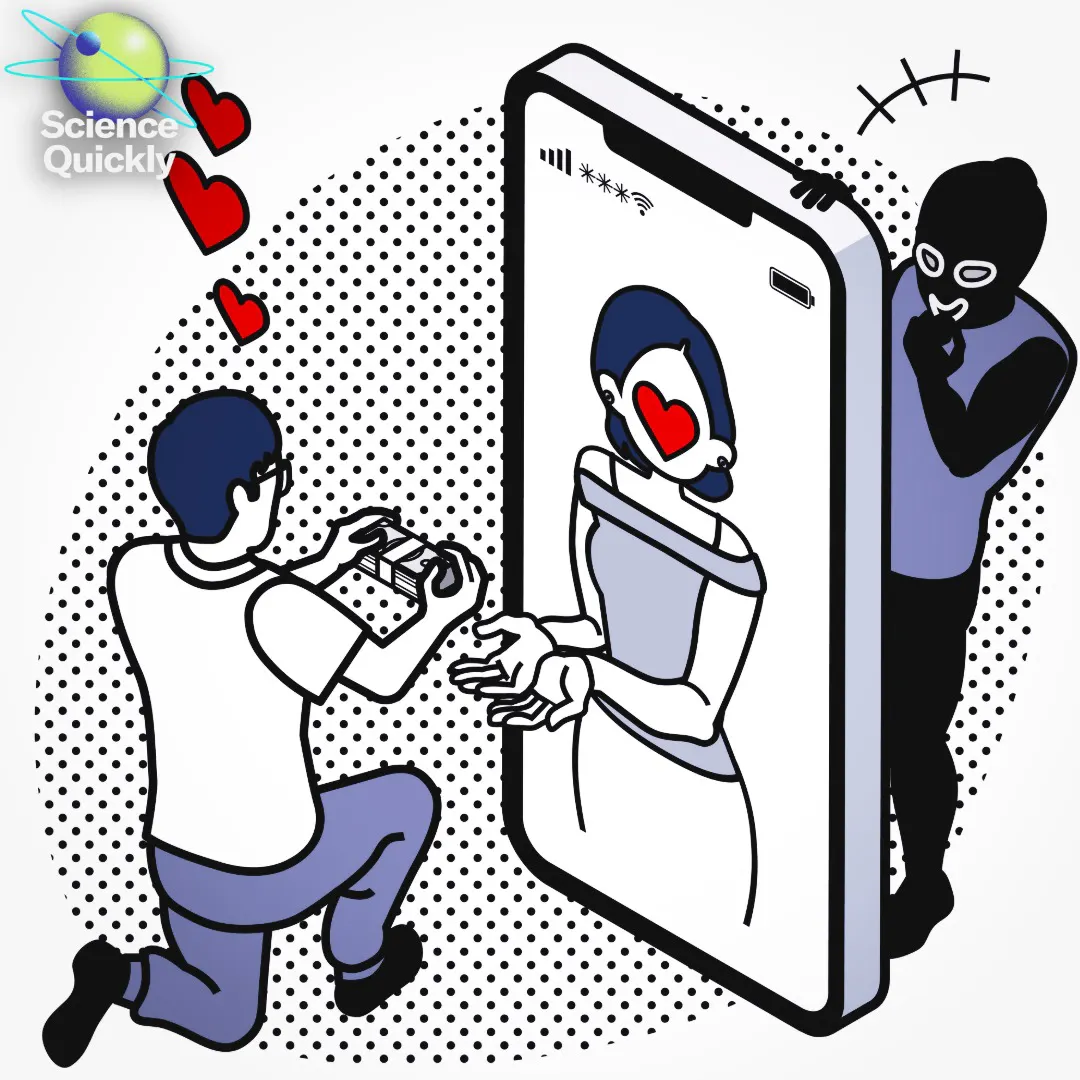
Can you spot a romance scam?
In this episode of Science Quickly, Rachel Feltman speaks with criminologist Fangzhou Wang about how romance scams have evolved from simple online deception…
- Science Quickly
Navigating Science and Health Misinformation [Sponsored]
As health misinformation surges online, Morgan McSweeney—known online as Dr. Noc, a science communicator and immunology expert whose videos reach millions each…
 Science Quickly
Fire amoebas, fossilized vomit and AI energy demands
In this episode of Science Quickly, we cover discoveries both big and small, from the supersized particle collider needed to find the next subatomic specimen…
 Science Quickly
Unexplainable: Dark matter and the end of answers
In this episode of Science Quickly, we share part two of our crossover with Vox’s Unexplainable in which we explore one of the universe’s biggest mysteries…
- Science Quickly
Rethinking Age-Related Vision Loss [Sponsored]
Treatment for wet age-related macular degeneration has advanced significantly with anti-VEGF therapies, but the need for frequent injections remains a…
 Science Quickly
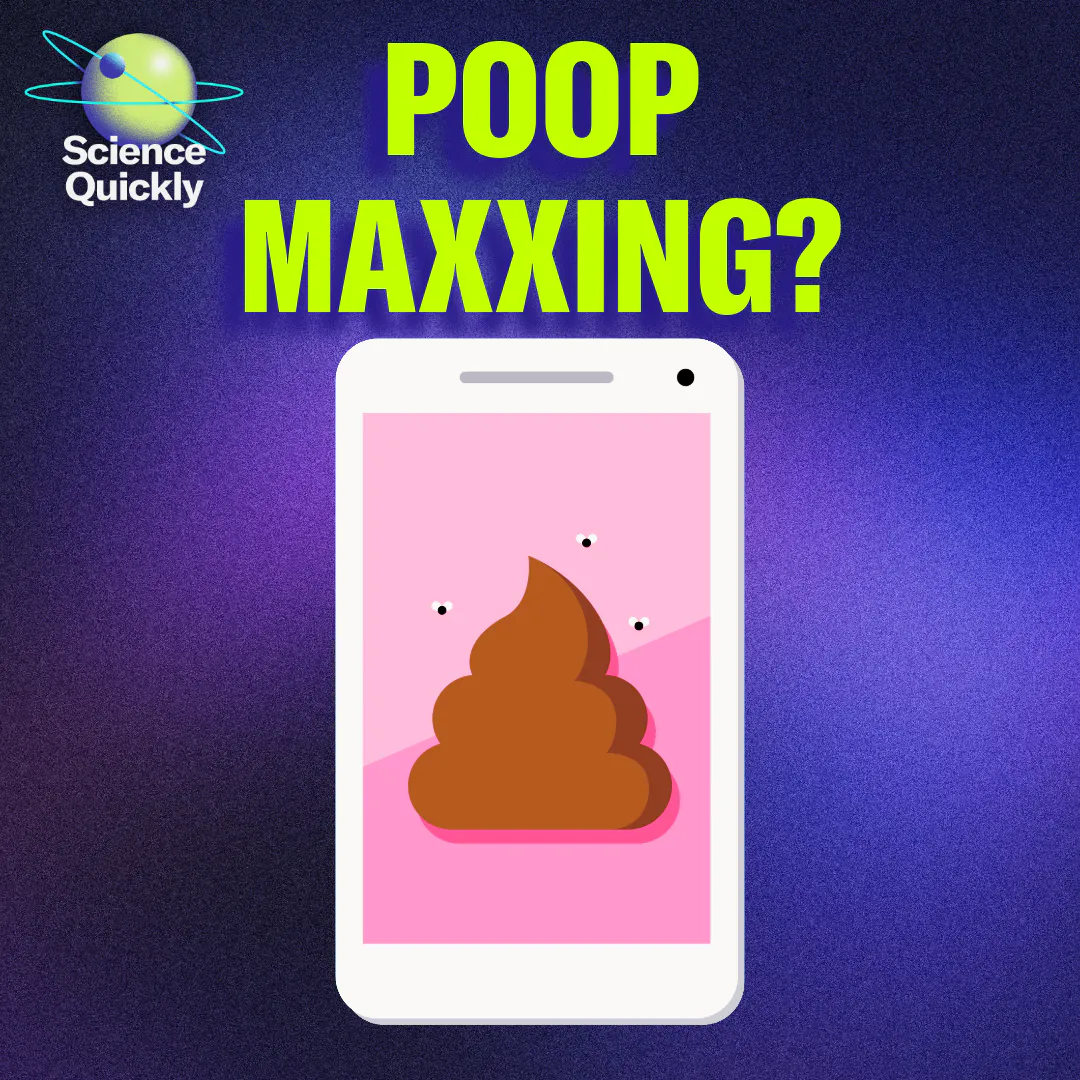
Should you be ‘poop maxxing’?
As colon cancer rates rise in younger adults, more and more people are paying attention to their poop and talking about it on social media, where such “poop…
 Science Quickly
Space weapons are here, and AI experts are sounding alarms
In this episode of Science Quickly, we discuss newly revealed U.S. space weapons, growing artificial intelligence safety concerns and the Environmental…
 Science Quickly
Can you hear a forest disappear?
In this episode of Science Quickly, filmmaker and journalist Leah Varjacques takes us to a Bornean rainforest area, where centuries-old patterns of human and…
 Science Quickly
Unexplainable: What happened before the big bang?
In this special crossover episode, Science Quickly shares an appearance by host Rachel Feltman on Vox’s Unexplainable. Together with host Noam Hassenfeld, she…
 Science Quickly
From 9/11’s lasting legacy to AI’s disruptive future
In this episode of Science Quickly, we explore newly released 9/11 records and their revelations about the attacks’ lasting health impacts, unpack a…
 Science Quickly
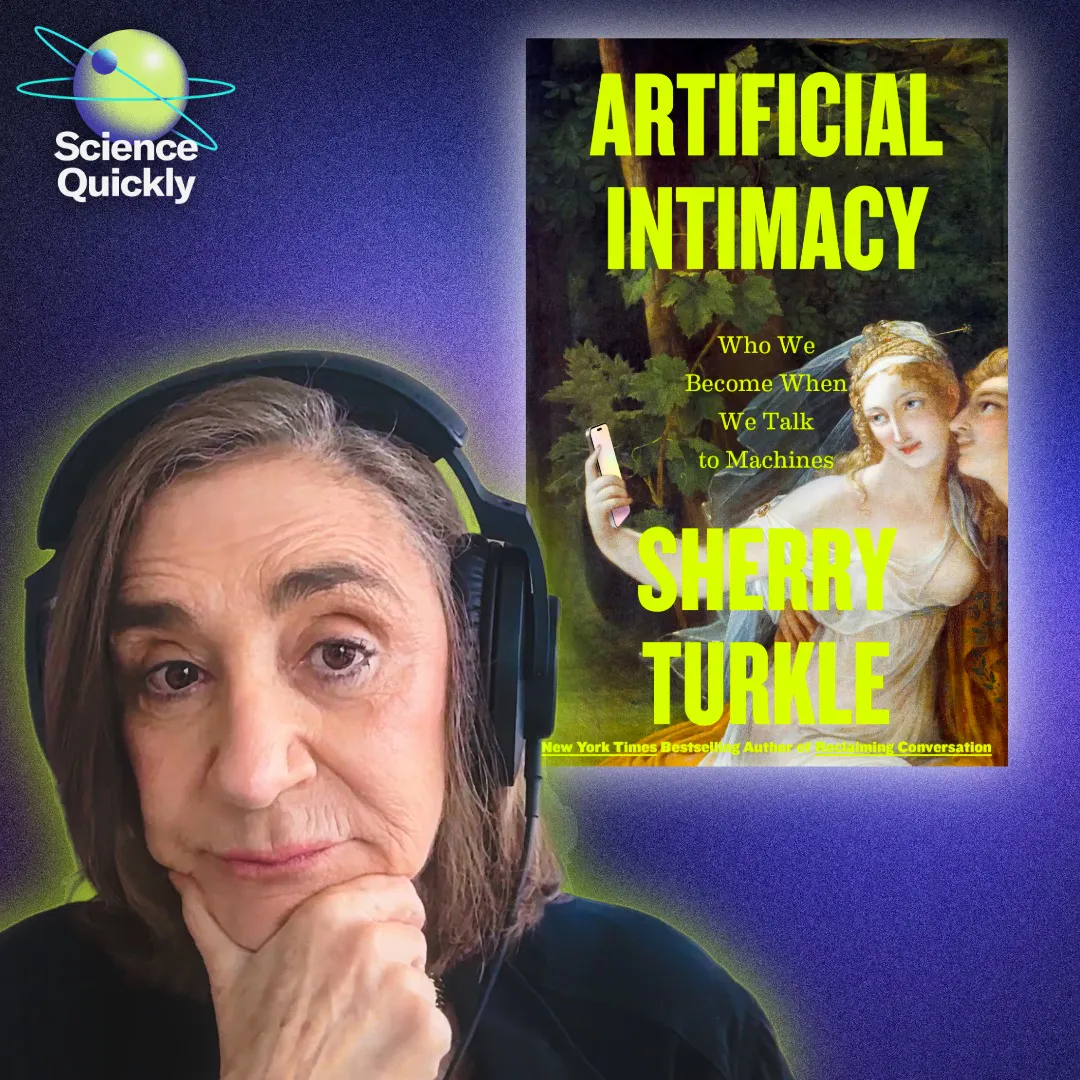
Is AI making us less human?
Can an artificial intelligence really be a friend? In this episode of Science Quickly, Scientific American books and culture lead Bri Kane sits down with…
 Science Quickly
The surprising science of friendship
Friendships are key to our well-being, but what kind of friendships do we really want? Despite being such a foundational part of the human experience, the…
 Science Quickly
What if a dating app matched you with a dead body?
What if a dating app could optimize human connection, even after death? In this episode of Science Quickly, books and culture editor Bri Kane speaks with…
 Science Quickly
The hackers fighting to keep our water safe
Across the U.S., the digital infrastructure that runs our utilities is quickly aging, becoming more vulnerable to cyber attacks. Recently at least a dozen…
 Science Quickly
NASA’s Roman Space Telescope launches
In this episode of Science Quickly, NASA’s Nancy Grace Roman Space Telescope begins its mission to probe dark energy, hunt for distant worlds and map the…
 Science Quickly
Is Trump abandoning endangered species?
In July the U.S. Fish and Wildlife Service announced changes to how key parts of the Endangered Species Act (ESA) will be implemented, including a new…
 Science Quickly
Could damaged sperm be causing miscarriages?
Miscarriage is often treated as a problem rooted in the pregnant partner, but emerging research suggests sperm may play a bigger role than many people realize…
 Science Quickly
What happens when Arctic ice melts and forests lose protection?
In this episode of Science Quickly, we examine a proposal to roll back protections for millions of acres of U.S. roadless forests, explore how climate change…
 Science Quickly
Can magic mushrooms help treat anorexia?
A small clinical trial suggests that psilocybin, the psychedelic compound in magic mushrooms, may help some people with anorexia when combined with intensive…
 Science Quickly
Is AI making the creativity crisis worse?
Astrophysicist, folklorist and author Moiya McTier joins Science Quickly to discuss her new book Mothers of Invention, a sweeping look at the history of human…
 Science Quickly
A stunning solar eclipse, a vaccine shake-up and coffee’s big win
In this episode of Science Quickly, we explore the awe of a rare total solar eclipse, examine renewed controversy around childhood vaccines, look at the…
 Science Quickly
How AI helped a nonspeaking opera star find his voice
In this episode of Science Quickly, we meet Jakob Jordan, an autistic performer with apraxia, who stars in the groundbreaking opera Sensorium Ex. Host Rachel…
 Science Quickly
Could humans learn to speak in music?
What would it take to create a language made entirely of music? In this episode of Science Quickly, Scientific American’s Allison Parshall explores the science…
 Science Quickly
A moon crash, water hacks and a new mRNA flu shot
A wayward SpaceX rocket crashes into the moon, offering scientists a rare chance to study a lunar impact, while cyberattacks targeting U.S. water utilities…
 Science Quickly
Is Gen Z making smoking cool again?
In this episode of Science Quickly, Scientific American’s Adam Kovac joins host Rachel Feltman to explore why some experts worry cigarettes may be making a…
 Science Quickly
Getting to YouTube science stardom by building $#!%ty robots
In this episode of Science Quickly, we talk with Simone Giertz, YouTube maker extraordinaire, about her life in science and the influencer spotlight. She…
 Science Quickly
Explosive diarrhea, ‘protein maxxing’ and the science of burnout
In this episode of Science Quickly, we unpack a major outbreak of Cyclospora infections linked to contaminated produce, explore new research that suggests that…
 Science Quickly
Lewis, Clark and America’s first great science mission
In this episode of Science Quickly, Scientific American’s books and culture lead Bri Kane talks with historian Craig Fehrman about This Vast Enterprise, his…
- Science Quickly
How to beat rogue antibodies at their own game [Sponsored]
Almost all of us know someone who suffers from an autoimmune disease. Or maybe you do yourself. Autoimmune diseases are common: only cancer and cardiovascular…
 Science Quickly
Summer Reading Challenge: Quantum queerness, Pompeii and plant horror
Science Quickly’s summer reading series continues! Host Rachel Feltman chats with Scientific American books editor Bri Kane about the magazine’s Summer Reading…
 Science Quickly
Your summer reading list starts here
Kick off Scientific American’s first-ever Summer Reading Challenge with book recommendations from our editors, including mind-bending fiction, ecohorror and…
 Science Quickly
Are we too afraid of the sun?
In this episode of Science Quickly, host Rachel Feltman talks with author Rowan Jacobsen about new research on sun exposure and health. While too much sun…
 Science Quickly
Ebola update, World Cup heat risks, dad brains
In this episode of Science Quickly, we start with a quick update on the Ebola outbreak surging in parts of Africa. Host Rachel Feltman is then joined by…
 Science Quickly
How common viruses could quietly raise your cancer risk
In this episode of Science Quickly, one of SciAm’s Young American Scientists, biologist Jaye Gardiner, explores how common viral infections may raise cancer…
 Science Quickly
The neuroscientist decoding how the brain learns
In this episode, host Rachel Feltman interviews neuroscientist Kauê M. Costa, who is among Scientific American’s inaugural cohort of Young American Scientists…
 Science Quickly
From aspiring actress to NASA astrophysicist
In this episode of Science Quickly, host Rachel Feltman interviews NASA astrophysicist Erini Lambrides about her unconventional journey from pursuing the…
 Science Quickly
Disclosure Day and the science of alien language
In the new movie Disclosure Day, aliens communicate through a series of strange clicks and pops. But what could an alien language actually be like? In this…
 Science Quickly
The science of World Cup grass
In this episode of Science Quickly, we explore the science behind preparing natural grass for the 2026 International Federation of Association Football (FIFA)…
 Science Quickly
World Cup health monitoring ramps up as Mars mission ends and AI rules shift
In this episode of Science Quickly, we look at how World Cup host cities are tracking potential disease outbreaks with wastewater surveillance, discuss the…