Shows / UnDisciplined

UnDisciplined
Each week, UnDisciplined takes a fun, fascinating and accessible dive into the lives of researchers and explorers working across a wide variety of scientific fields.
Episodes
- UnDisciplined
UnDisciplined: Unveiling the urban oasis — how tree planting combats rising heat in cities
One of the places the world is warming the most is in our cities, as a result of the urban heat island effect. But there’s a way to combat this problem.
- UnDisciplined
UnDisciplined: Here's why heat waves in our rivers are increasing – and why that's a problem
Climate scientists are now looking at rivers and streams. And what they're finding is that these parts of our world are warming rapidly.
- UnDisciplined
UnDisciplined: How will climate change impact how animals mate and reproduce?
In a rapidly warming world, hot sex just took on a whole new meaning.
- UnDisciplined
UnDisciplined: The muses help those who help themselves
If you've ever had writer's block then you know how desperate that experience can be. What you might not realize is that you're in very good company.
- UnDisciplined
UnDisciplined: Here's why you should be optimistic about the future of climate change
Scientists and journalists have been trying to shock people with the overwhelming weight of evidence that our planet is warming. Now perhaps a new tactic is in…
- UnDisciplined
UnDisciplined: Is predictive, personalized treatment the future of medicine?
Our healthcare systems are designed to help people once they have a disease – not to keep them from getting sick in the first place.
- UnDisciplined
UnDisciplined: How does climate change impact the geography of inequity?
Redlining has been illegal for 50 years, but the negative effects reverberate today. Redlined communities are more at risk under climate change.
- UnDisciplined
UnDisciplined: Opioid use and recovery during the COVID-19 pandemic
During the first year of the COVID-19 pandemic there was an explosive rise in opioid deaths.
- UnDisciplined
UnDisciplined: Searching for solutions
A very wet winter changed things and in most parts of the West, the drought seems to be over. That gives us a little bit of time to keep working on solutions…
- UnDisciplined
UnDisciplined: Could whales help fight climate change?
The profound decline in whale populations doesn't just change our ocean ecosystems – it might also be impacting our atmospheric climate.
- UnDisciplined
UnDisciplined: Taking the unconventional path
A variety of studies have shown that, by the second grade, about 75 percent of girls have already developed an implicit belief that science, math and…
- UnDisciplined
UnDisciplined: Why are book bans on the rise in the US?
There are some ways in which this latest cycle of censorship is different, and perhaps even more alarming.
- UnDisciplined
UnDisciplined: Is climate change making us sicker?
Climate change isn't just making our world incrementally warmer – its impacts are making us sicker, both physically and mentally.
- UnDisciplined
UnDisciplined: The battle between danger and denial
When the EPA told people in Globe, Arizona, that their soil was toxic and needed to be cleaned up, many residents responded in a surprising way.
- UnDisciplined
UnDisciplined: How can we hold politicians responsible for their inciteful speech?
Almost everyone these days seems to agree that political discourse in this country has gotten too heated – a group based in Utah created a tool to try and…
- UnDisciplined
UnDisciplined: Technology is decreasing your attention span – here's how to help that
Our attention spans have been significantly changed by the digital devices that surround us, but there's things we can do to help that.
- UnDisciplined
UnDisciplined: Surprising and often accidental discoveries that changed the world
The "project of physics" will never be complete, but some scientists in the 19th century thought there was little left to explore. Thankfully, that wasn't the…
- UnDisciplined
UnDisciplined: How do we prevent a dead pool in the Colorado River Basin?
Sometime in the next few years, the water level in Lake Powell may drop so low that it will be impossible for the lake’s dam to continue producing electricity.
- UnDisciplined
UnDisciplined: What Lula's election means for Brazil's rainforests
What Luiz Inácio Lula da Silva does now about the Amazon may impact every person on this planet.
- UnDisciplined
UnDisciplined: The 2000-year-old modern scholar
Plutarch's work continues to find relevance today on pretty much every issue under the sun.
- UnDisciplined
UnDisciplined: How Donald Trump exploited the discourse of American exceptionalism
Scholars Jason Gilmore and Charles Rowling have argued that Trump has taken American exceptionalism and turned it on its head.
- UnDisciplined
UnDisciplined: On outliving our parents
Many of us will be having the experience of not only outliving our parents, but growing to ages they never saw, and living those years without their examples.
- UnDisciplined
UnDiscplined: Does the canine coat reflect immunity to a deadly disease?
A team of researchers noticed that as you go south along the Rockies, the number of black coated wolves will increase. But what does this have to do with the…
- UnDisciplined
UnDisciplined: The forgotten wives of Joseph Smith
Many of Joseph Smith's wives have been lost to history due to early secrecy and reluctance to discuss these marriages. Historian Todd Compton is trying to…
- UnDisciplined
UnDisciplined: Man's best friend in life and art
We’re doing a deep dive on dogs in art, and what that relationship means about dogs and humans alike.
- UnDisciplined
UnDisciplined: Military veterans can offer lessons on cultivating inner peace
For veterans post traumatic stress is real, but so is post traumatic growth.
- UnDisciplined
UnDisciplined: Researchers unraveled the mystery of European eel migration
We're talking to the researchers who tracked European eels to solve 100 year mystery.
- UnDisciplined
UnDisciplined: What can be done to save this 80,000-year-old aspen forest?
Some parts of the Pando tree forest are thriving, others are nearly gone. And it's not clear what could or should be done to save it.
- UnDisciplined
UnDisciplined: how "thinking like a predator" helped a USU ecologist study bumble bee mimicry
Mimicry is an evolutionary survival tactic in which multiple species share a similar appearance in order to signal to predators that they should be left alone.
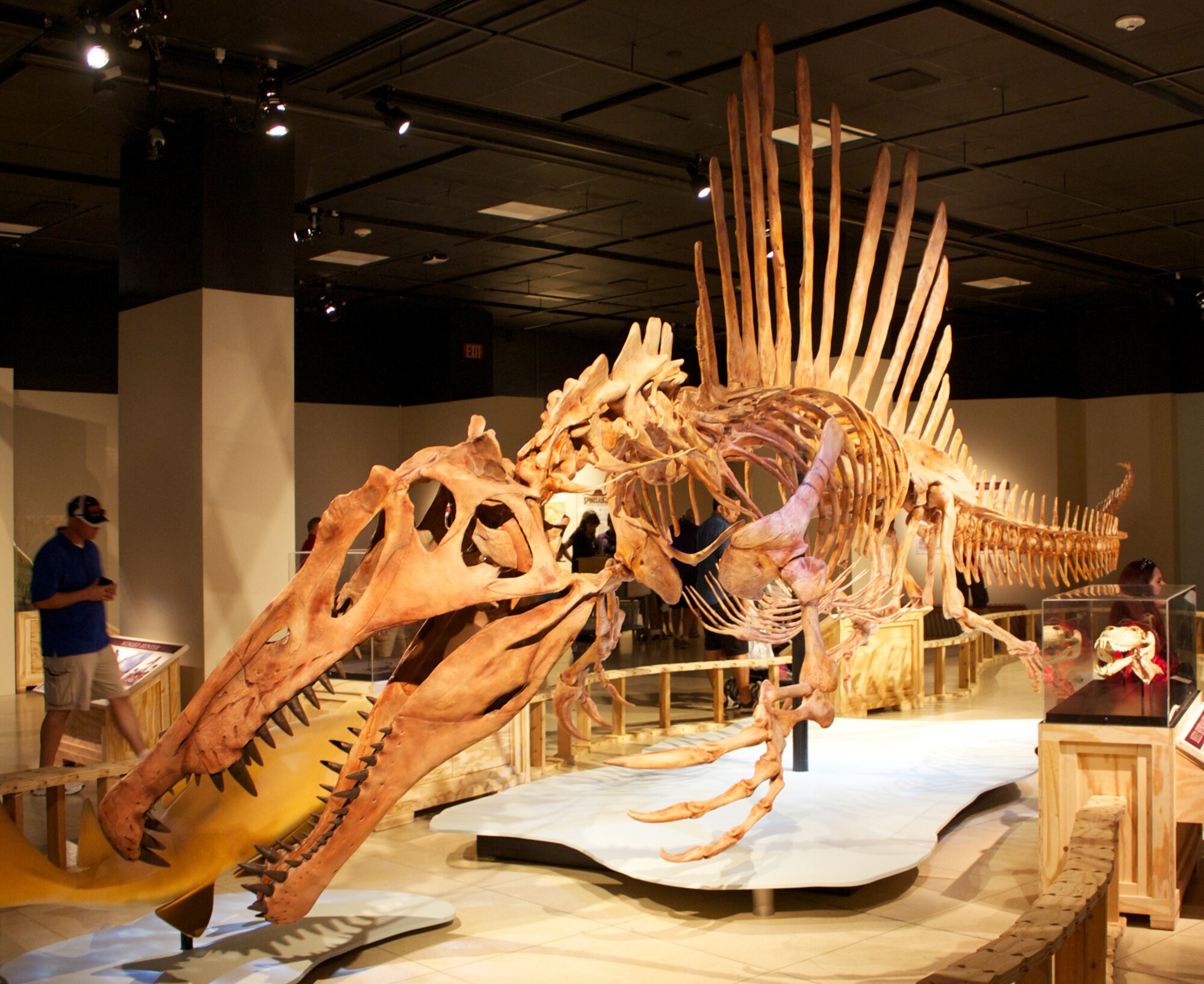 UnDisciplined
: Dense bones allowed the Spinosaurus to hunt under water
A study suggests the Spinosaurus may have been subaqueous foragers, which means they pursued prey underwater.
- UnDisciplined
UnDisciplined: rattlesnakes have a genetically diverse venom toolbox to keep up with evolving prey
A new study suggests that rattlesnakes evolved to reach into a toolbox that already has everything they need to adapt, overcome, and eat well.
- UnDisciplined
UnDisciplined: How this invasive species has made its way across continents
Researchers are trying to better understand what makes something more likely to be successful once it arrives in a new habitat through the lens of an native…
- UnDisciplined
UnDisciplined: hydropower dams are leading to species extinctions
Damming tropical rivers not only drowns wildlife and lowland habitats, it turns ridge top forests into islands, isolating animal populations that need…
- UnDisciplined
UnDisciplined: what this dried-out lake in Chile tells us about the future of the Great Salt Lake
We explore a cautionary tale about our beloved Great Salt Lake with insights from a researcher at Utah State University who visited Lake Aculeo in Chile.
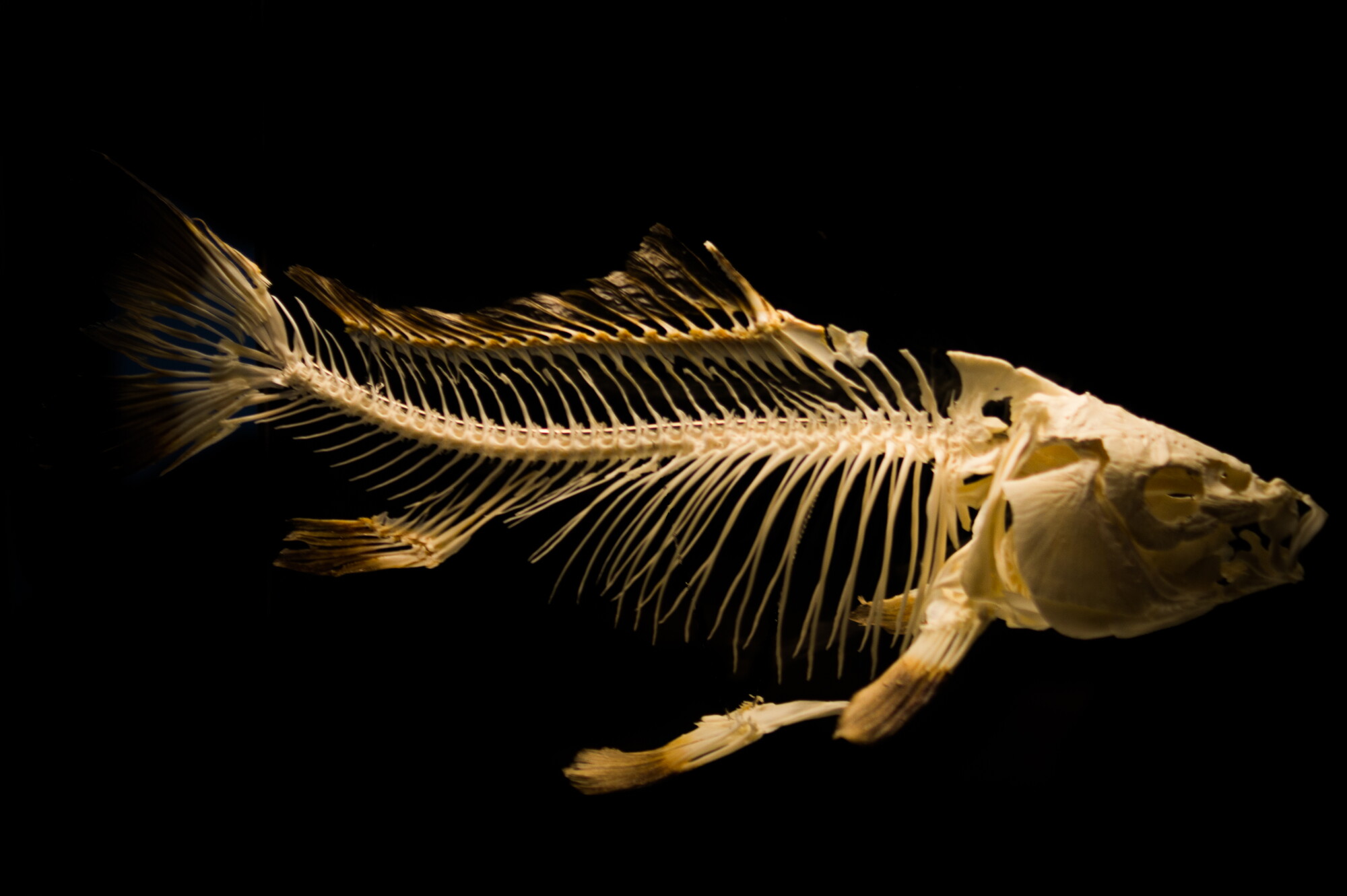 UnDisciplined
: what do fish bones tell us about the Ancestral Puebloans?
Archaeologists have developed new techniques to reconstruct the diet of the Ancestral Pueblo people in the southwestern United States.
- UnDisciplined
UnDisciplined: This invasive plant is destroying the Great Salt Lake wetlands
A team of wetland researchers at Utah State University are extending the scientifically sound information to engage land managers and policymakers, bringing…
- UnDisciplined
UnDisciplined: what makes these berries blue?
An exciting new paper has documented the biology and evolutionary history behind blue food, revealing the complex ways that plants have evolved their…
- UnDisciplined
UnDisciplined: Is human intervention necessary to regenerate forests after a wildfire?
A recent study suggests that fire refugia – the green islands of live trees that remain after forest fires – can enhance forest regeneration.
- UnDisciplined
UnDisciplined: Scientists can now eavesdrop on whales
A breakthrough approach in marine acoustics that uses existing systems of underwater fiber optics now allows scientists to eavesdrop on whales. This innovative…
- UnDisciplined
UnDisciplined: what can 3D simulations of sheep tibia tell us about healing bone fractures?
A new study used virtual imaging techniques to lead to accurately diagnosing the many cases when healing fractures of bones fail to fuse.
- UnDisciplined
UnDisciplined: here's what the climate crisis is doing to our mental health
A global study found that children and young adults are distraught, afraid, sad, angry and ashamed about what is happening to our global climate. The study's…
- UnDisciplined
UnDisciplined: over 20 percent of reptiles are threatened with extinction
Over 20%, one out of five, of reptile species are now under threat of extinction. However, conservation efforts for birds, mammals and amphibians are…
- UnDisciplined
UnDisciplined: chemists put a new spin on the phrase 'tree of life'
A new study has revealed that the bark of a tall rainforest tree may provide a cornucopia of potentially useful drugs for people — drugs that could lead to…
- UnDisciplined
UnDisciplined: what happens when humans pass diseases back to animals?
We know that many viruses are passed from animals to humans. But there's another part of this story. We often give viruses back to animals. And this week…
- UnDisciplined
UnDisciplined: could this new technology ensure clean water for everyone?
One in ten people across the planet still don't have access to clean water. But there may be a simpler way – a little trick of bioengineering that could assure…
- UnDisciplined
UnDisciplined: nature improves mental health… but only for rich, white people?
A new study shows that the benefits of nature on mental health are based on studies that are strongly dominated by wealthy countries and Caucasian people…
- UnDisciplined
UnDisciplined: could social distancing save monarch butterflies from a fatal parasite?
Monarch butterflies are threatened by a fatal parasite and a reason for infection may be that conservationists rear these butterflies and plant Milkweeds for…
- UnDisciplined
UnDiscplined: trees provide over $100 billion in ecosystem services... and we're destroying them
A recent study documents how remote sensing tools have transformed the ways we monitor life on Earth. We'll also learn about the value of trees, their…
- UnDisciplined
UnDiscplined: trees provide over $100 billion in ecosystem services... and we're destroying them
A recent study documents how remote sensing tools have transformed the ways we monitor life on Earth. We'll also learn about the value of trees, their…
- UnDisciplined
UnDisciplined: climate projections predict increased risk of joint surge rainfall events
A recent study simulated the hazards of past cyclones and made predictions about future storms and found that by 2100 cyclones could be 30 to 200 times more…
- UnDisciplined
UnDisciplined: what makes burrowing owls choose to stay when they’ve been relocated?
Burrowing owls have suffered from human development changing their habitat. A group of researchers have studied the relocation of these birds and have…
- UnDisciplined
UnDisciplined: scientists developed injectable gel that can help chronic pain in joints
Materials science researchers have developed a polymer gel that targets aching joints affected by osteoarthritis and delivers medication to them.
- UnDisciplined
UnDisciplined: how stable are Utah's famous red rock formations?
A Utahn research team generated predictions about the seismic stability of famous red rock formations with the help of experienced mountain climbers.
- UnDisciplined
UnDisciplined: birds are shrinking due to climate change, especially small-brained ones
A new study – based on the analysis of over 70,000 individual birds – found bigger brained birds have been able to withstand shrinkage due to climate change.
- UnDisciplined
UnDisciplined: why you should be scared about the spread of 'ghost forests'
Researchers documented some coastal forests are now inundated by water they can’t use because it contains high levels of salt, a consequence of sea levels…
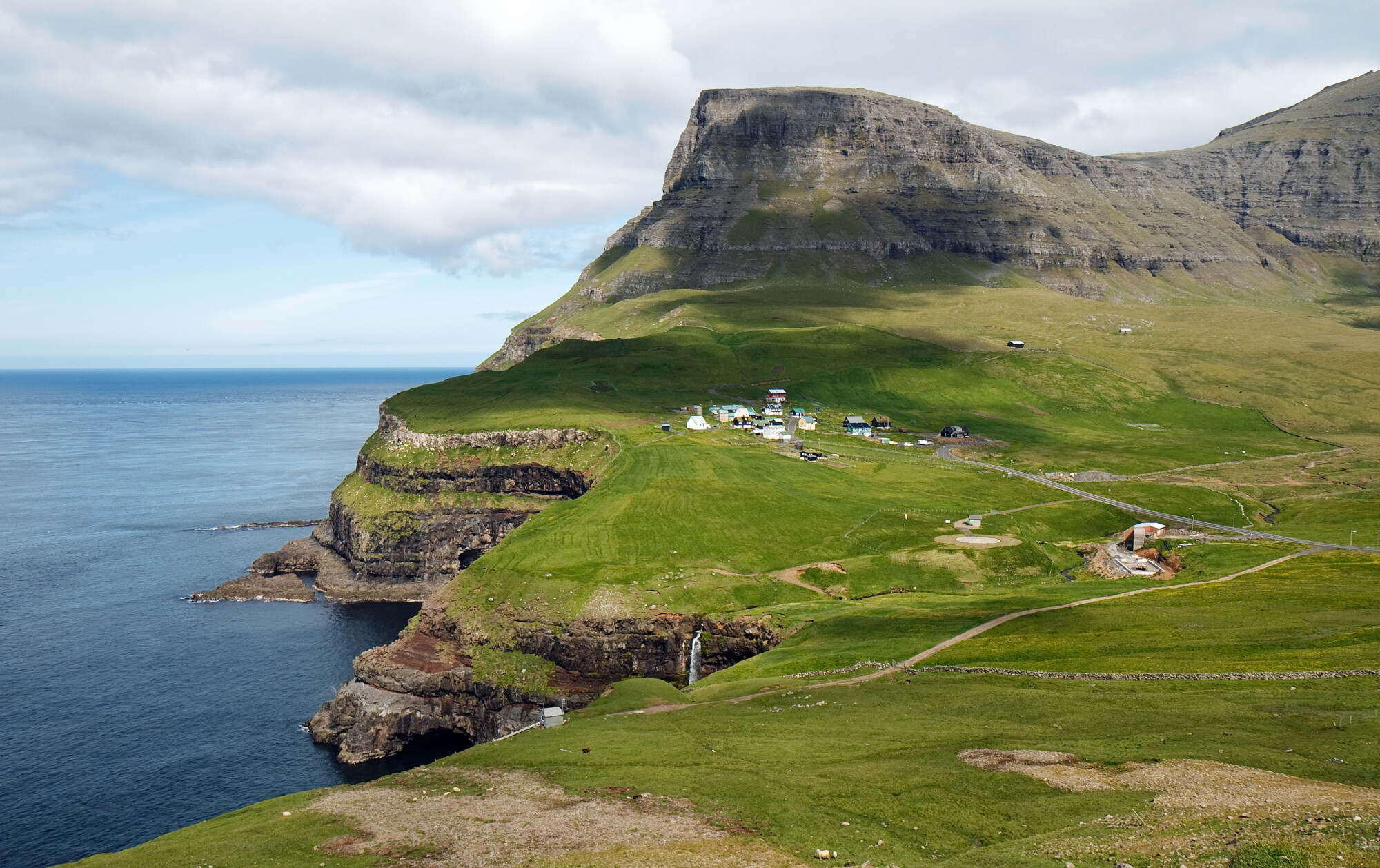 UnDisciplined
: researchers examined ancient sheep poop and now we don't know who colonized the Faroe Islands
A recent study weaves together evidence from genetics, isotopes, and the pollen record to suggest that other people arrived there... long, long before the…
- UnDisciplined
UnDisciplined: researchers identify the visual preferences of the world's deadliest animal
An interdisciplinary research team has woven evidence from the literature, their own experiments, and wind tunnels to understand how mosquitoes hunt and find…
- UnDisciplined
UnDisciplined: aging increases cluttered memory and creativity
A new study documents that older adults have more space allocated to clutter, but that very clutter can also make older people more creative.
- UnDisciplined
UnDisciplined: this impact framework could help us stop wrecking our recreation
Skiing, biking, hiking, ATV riding. Whatever form recreation takes, it has an impact on the environment. So how can studying the spectrum of impacts that…
- UnDisciplined
UnDisciplined: what will happen to Utah's 'greatest snow' when there's no more snow?
Utah's title of "greatest snow" is at risk due to climate change. We're focusing on impacts, perceptions and adaptation strategies ski resorts are taking as…