Shows / UnDisciplined

UnDisciplined
Each week, UnDisciplined takes a fun, fascinating and accessible dive into the lives of researchers and explorers working across a wide variety of scientific fields.
Episodes
- UnDisciplined
UnDisciplined: Are our internal biases impacting the upcoming election?
Political analysts were concerned about the Bradley Effect in 2008 in regards to Obama—and Anu Gupta says now’s the time to think about how this may impact…
- UnDisciplined
UnDisciplined: How does mutualism drive ecologies under climate change?
For a very long time it was assumed that competition and predation drove evolution and ecologies. And it’s true that antagonism plays a role. But so does…
- UnDisciplined
UnDisciplined: How does carbon behave at different elevations and in different biomes?
Marcy Litvak says it’s vital that we try to sort out how carbon behaves in different areas of the world, and research efforts like the New Mexico Elevation…
- UnDisciplined
UnDisciplined: What do medical blind spots mean for our health?
When strong beliefs, sometimes century-long beliefs, are disputed, people tend to double down. And this is true for many people–from cult members, to respected…
- UnDisciplined
UnDisciplined: Does hair matter?
In his new book, Combing Through the White House, Theodore Pappas suggests that the hair of American leaders has long conveyed important political and symbolic…
- UnDisciplined
UnDisciplined: Do women think about climate change differently than men?
It is sometimes assumed that women, as a group, tend to feel differently about climate and climate change than men. and that’s true — but as it turns out…
- UnDisciplined
UnDisciplined: Have greenhouse gas emissions peaked? Does that mean we’re going to be OK?
It was not so long ago that there seemed to be no end in sight for the continual rise of greenhouse gas emissions across the globe. But now it seems possible…
- UnDisciplined
UnDisciplined: Are wildfires increasing under climate change?
The western United States is getting hotter, windier, and drier. And that means more fire risk. It also means that when a fire does occur, it is likely to be…
- UnDisciplined
UnDisciplined: What is the predatory impact of wolves in Yellowstone?
Wolves were once naturally abundant in Yellowstone national park, but starting in the 1870s they fell prey to humans who hunted them until their numbers were…
- UnDisciplined
UnDisciplined: What can we learn from how farmers adjusted to ancient climate cycles?
One of the things that is often missed when we talk about climate change and agriculture is that climate shifts have always impacted where we can plant and…
- UnDisciplined
UnDisciplined: Where did climate denial come from? (Part 2)
For decades the basic principles of climate science were not at all controversial. To understand what changed we have to go back into the past. That’s what…
- UnDisciplined
UnDisciplined: Where did climate denial come from? (Part 1)
For decades and decades the basic principles of climate science were not at all controversial. And then, something happened. But to understand why, we have to…
- UnDisciplined
UnDisciplined: Did human-caused climate change actually start thousands of years ago?
Archeological anthropologist Todd Braje points out that humans have been impacting global climates and ecologies for millennia. And he says that if we really…
- UnDisciplined
UnDisciplined: When climate scientists are under attack, who has their backs?
Since 2011, the Climate Science Legal Defense Fund has supported hundreds of researchers who have been attacked, sued, defamed, and threatened — and this year…
- UnDisciplined
UnDisciplined: Does crop insurance sometimes do more harm than good?
Anne Schechinger, isn’t opposed to federally subsidized insurance, but she believes it’s long past time that we look very hard at places like the Lonestar…
- UnDisciplined
UnDisciplined: We might be able to engineer our way out of global warming. But should we?
It's possible that a nation suffering from the extreme effects of climate warming might take simple steps that could change the global atmosphere. There’s not…
- UnDisciplined
UnDisciplined: What do wolves tell us about our relationship with nature?
John Vucitech suggests that it’s not just the science that matters when we’re talking about our longstanding views on wolves–it’s also a matter of compassion…
- UnDisciplined
UnDisciplined: What can we do to save the coral reefs? Here’s one, um, cool solution.
Coral reefs are some of the oldest, most diverse ecosystems on Earth. But they’re also among the most vulnerable. So, what do we do? Mary Hagedorn has an idea…
- UnDisciplined
UnDisciplined: Should we all trash talk a little bit more?
Rafi Kohan’s latest book tells the story of trash talk, and explains why the practice of leveling vicious insults at our rivals might not be all that bad.
- UnDisciplined
UnDisciplined: How can we find hope in a changing world?
Bill Weir once felt as though he was watching the American story change in staggering ways. But now he wakes up each morning with more wonder than worry.
- UnDisciplined
UnDisciplined: How can we reconnect with nature?
Brittany Gowan says that no matter where you are, and no matter how far you might feel from the world as it once existed, you can still connect to nature.
- UnDisciplined
UnDisciplined: How to survive the end of the world
If you have a gnawing sense that this is end of the world as we know it, then know this: You’re not alone. And Athena Aktipis has some advice for you.
- UnDisciplined
UnDisciplined: How is climate warming impacting groundwater storage?
Until recently, there hasn’t been a great way of assessing groundwater storage, or understanding how climate change is impacting it.
- UnDisciplined
UnDisciplined: Can we predict the next snowpocalypse?
Matthew’s recent paper looks at the potential connections between ocean temperatures and epic winters, like the one we experienced in the Mountain West in…
- UnDisciplined
UnDisciplined: Can science be fun, guys?
For 21 years, the pub event series known as Nerd Nite has cross-crossed the globe, making science accessible and fun.
- UnDisciplined
UnDisciplined: How do you land on an asteroid?
In The Asteroid Hunter, Dante Lauretta chronicles the quest to retrieve a sample from Bennu, which is one of the large asteroids that is most likely to collide…
- UnDisciplined
UnDisciplined: Can a personal creed help young people connect in a rapidly changing world?
The young adults who comprise Generation Z live in a world of far less violent crime relative to the generation before them. So, why are so many of them…
- UnDisciplined
UnDisciplined: Why do people police language?
Anne Curzan might seem like a strange sort of English teacher. The veteran professor doesn’t believe in “right” and wrong” when it comes to grammar. Rather…
- UnDisciplined
UnDisciplined: How long can apes remember each other’s faces?
Laura Lewis met a bonobo named Louise as part of a study on the capacity of bonobos to remember the faces of apes they’d spent time with decades earlier. And…
- UnDisciplined
UnDisciplined: What is it like to leave an evangelical church?
Like many Americans, Sarah McCammon grew up in a deeply evangelical family, where she was plagued by fears and deep questions about her belief system, but…
- UnDisciplined
UnDisciplined: Is there more undiscovered life in the Great Salt Lake?
Until recently, nematodes weren’t known to live in the Great Salt Lake. And, in fact, very little lives there — because the lake’s salinity makes most life…
- UnDisciplined
UnDisciplined: What’s ‘fair’ when it comes to climate action?
When humans debate climate policy, the questions asked are often posed in terms of what will work best. Fairness isn’t always, or even often, taken into…
- UnDisciplined
UnDisciplined: Are food companies responsible for the epidemic in diabetes, cancer and dementia?
Ultra-processed food and the companies that produce them contribute significantly to the epidemic in diabetes, cancer, dementia, and other chronic disease. Is…
 UnDisciplined
: Why do humans use the past to inform the future?
Memory is not a rigid, static picture of what came before. Rather, it’s a nebulous, ever-changing conceptualization of who we were, what we believed, what…
- UnDisciplined
UnDisciplined: Robots, AI and the future of human connection
There is precedent for humans connecting with other living things, like getting attention, love, and companionship from dogs and cats and a few other animals…
 UnDisciplined
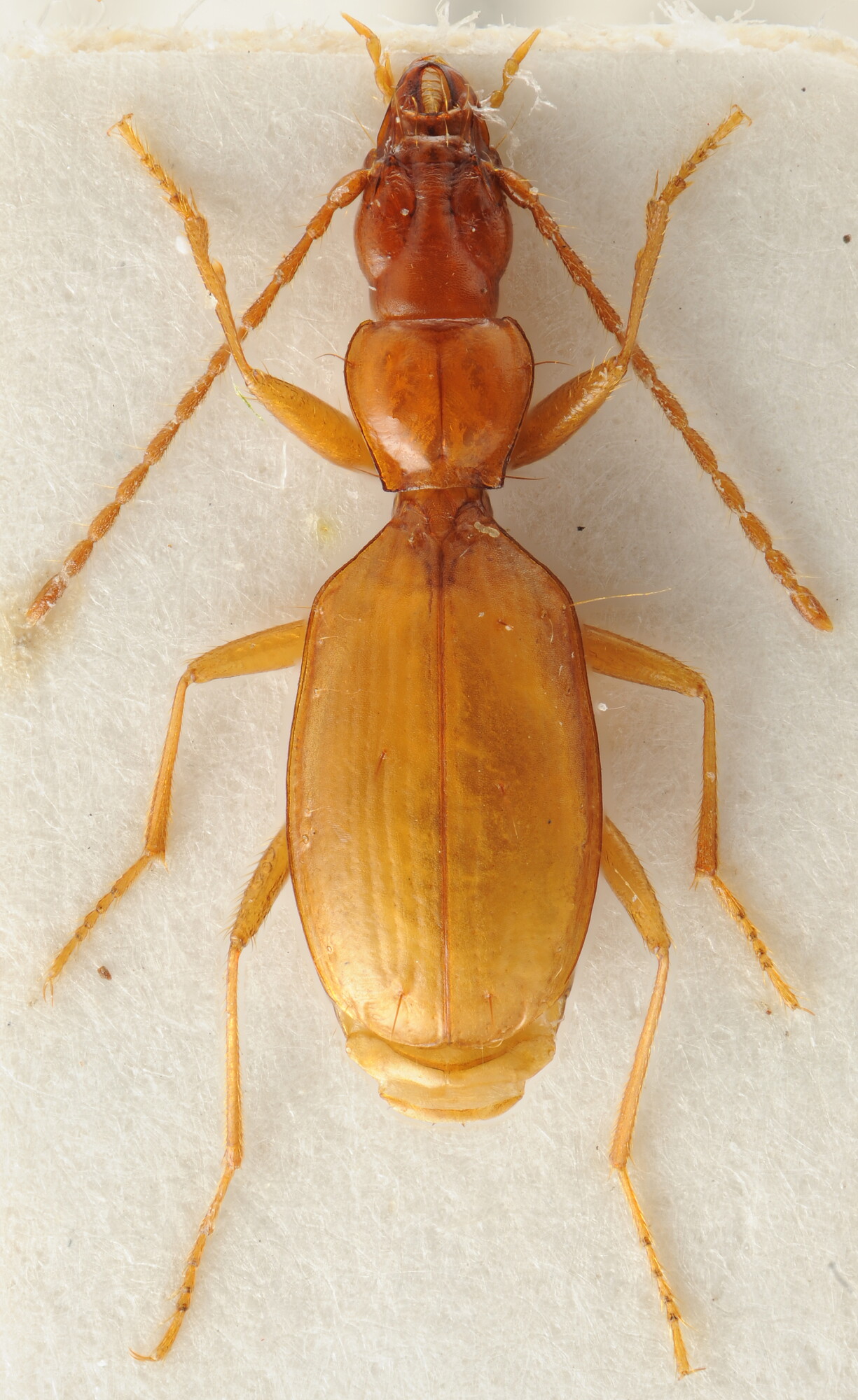
: Should species be named after horrible people?
When an Austrian bug collector discovered a new species of beetle in the 1930s, he bestowed upon it the name of a person he greatly admired. He called it…
- UnDisciplined
UnDisciplined: Can you still travel the roads that Julius Caesar built?
Long before Julius Caesar became one of the most powerful rulers in the world, he was a relatively unknown curator of the Via Appia, a road stretching from…
- UnDisciplined
UnDisciplined: What have we learned from 50 years of the Endangered Species Act?
A new book by Lowell Baier is not just a history of The Endangered Species Act, but an explanation of what’s gone right and what’s gone wrong in the…
- UnDisciplined
UnDisciplined: Were Utah’s pioneers slave owners?
Slavery in the United States is often thought to be an institution of the American South, but western states played a part as well. In Utah, a law passed in…
- UnDisciplined
UnDisciplined: Navigating the future of the global water crisis
Water crises are nothing new. Indeed they’ve influenced the very course of human history again and again but we’ve never had a planet with 10 billion people on…
- UnDisciplined
UnDisciplined: How bugs may help us get to Mars
If we are going to go to Mars, we’re going to need to bring a lot of things that we need to live that the red planet, so far as we can tell, just doesn’t…
- UnDisciplined
UnDisciplined: How inclusivity benefits men and women on the autism spectrum
Autism Spectrum Disorder exists on a continuum of behaviors, capabilities, and deviations from norms — and for a very long time, that spectrum didn't include…
- UnDisciplined
UnDisciplined: Rethinking sexual harassment prevention in the workplace
Almost all large organizations — from government entities to universities to private businesses — engage in sexual harassment prevention training. And yet the…
- UnDisciplined
UnDisciplined: With natural disasters rising in frequency, the US needs to rethink emergency management
The recent disaster in Maui was the deadliest U.S. wildfire in more than a century, and it has highlighted a gaping hole in the country's disaster response.
 UnDisciplined
: Why you should become a 'student of seed'
Consider for a moment what our world would look like without seeds.
 UnDisciplined
: Carl Nassib came out while playing in the NFL - here's what the media thought about it
There are no openly gay players in any of the five major men's sports leagues in the United States. But that's not because there are no gay players in those…
 UnDisciplined
: The surprising side of climate change - why you don't have to fear the future
There's a force that people don't think much about — the existential terror of accepting the truth about global warming. But what if we didn't have to be…
- UnDisciplined
UnDisciplined: How the Great Salt Lake is becoming hostile to life
As the Great Salt Lake has shrunk in recent years, it has become an increasingly hostile place to life of all kinds.
- UnDisciplined
UnDisciplined: How to protect yourself and your home from wildfires
Under climate warming, the risk of wildfires is increasing. So, we're all going to need to adapt.
- UnDisciplined
UnDisciplined: The economic evolution of an icon
The top-grossing movie of 2023 is a movie about a doll that is known for creating toxic expectations about girls' bodies and also paving the way for girls to…
- UnDisciplined
UnDisciplined: Clenched fists and full beards: two pieces of evidence suggesting humans evolved to fight
Humans have evolved to do lots of things. And one thing scientists are now coming to recognize is that we also evolved to fight — with each other.
- UnDisciplined
UnDisciplined: This asteroid is about to pass dangerously close to Earth
The OSIRIS-Rex mission has picked up a piece of the asteroid Bennu projected to pass close to Earth. Precautionary? Maybe. But there's a big enough risk that…
- UnDisciplined
UnDisciplined: 'It's one of the most lonely feelings': The realities of mainstream schooling for deaf children
85% of deaf children attend mainstream public schools and many deaf advocates will say this is a good thing, but good intentions and good educational practices…
- UnDisciplined
UnDisciplined: Romeo and Juliet — an age-old tale of love, death and pandemics
Romeo and Juliet has always been about life in a pandemic, we're just starting to notice it.
- UnDisciplined
UnDisciplined: What the life of Ira Hayes can teach us about the price of heroism
Ira Hayes has been commemorated in movies and songs, but his actual life after WWII is still shrouded in a lot of mystery.
- UnDisciplined
UnDisciplined: The US is not prepared for the dangers of zoonotic diseases
There is no national strategy, let alone a global one to mitigate the dangers of diseases that spread from animals to humans.
 UnDisciplined
: Linguists identify a new dialect emerging in South Florida
There are many ways Latino people and cultures have influenced the country. Some linguists say that an entirely new American dialect is taking shape right now…
- UnDisciplined
UnDisciplined: How women changed American journalism
In American history, women have largely been left out of newsrooms, so how has that changed history?
- UnDisciplined
UnDisciplined: What bees can teach us about trust and collaboration
When you think about a beehive, you probably imagine the queen as the leader. But that's not actually how it works.
- UnDisciplined
UnDisciplined: Are oceans the solution to the West's water woes?
We still need to figure out better long term water solutions. And those discussions tend to happen with more urgency when water is scarce.