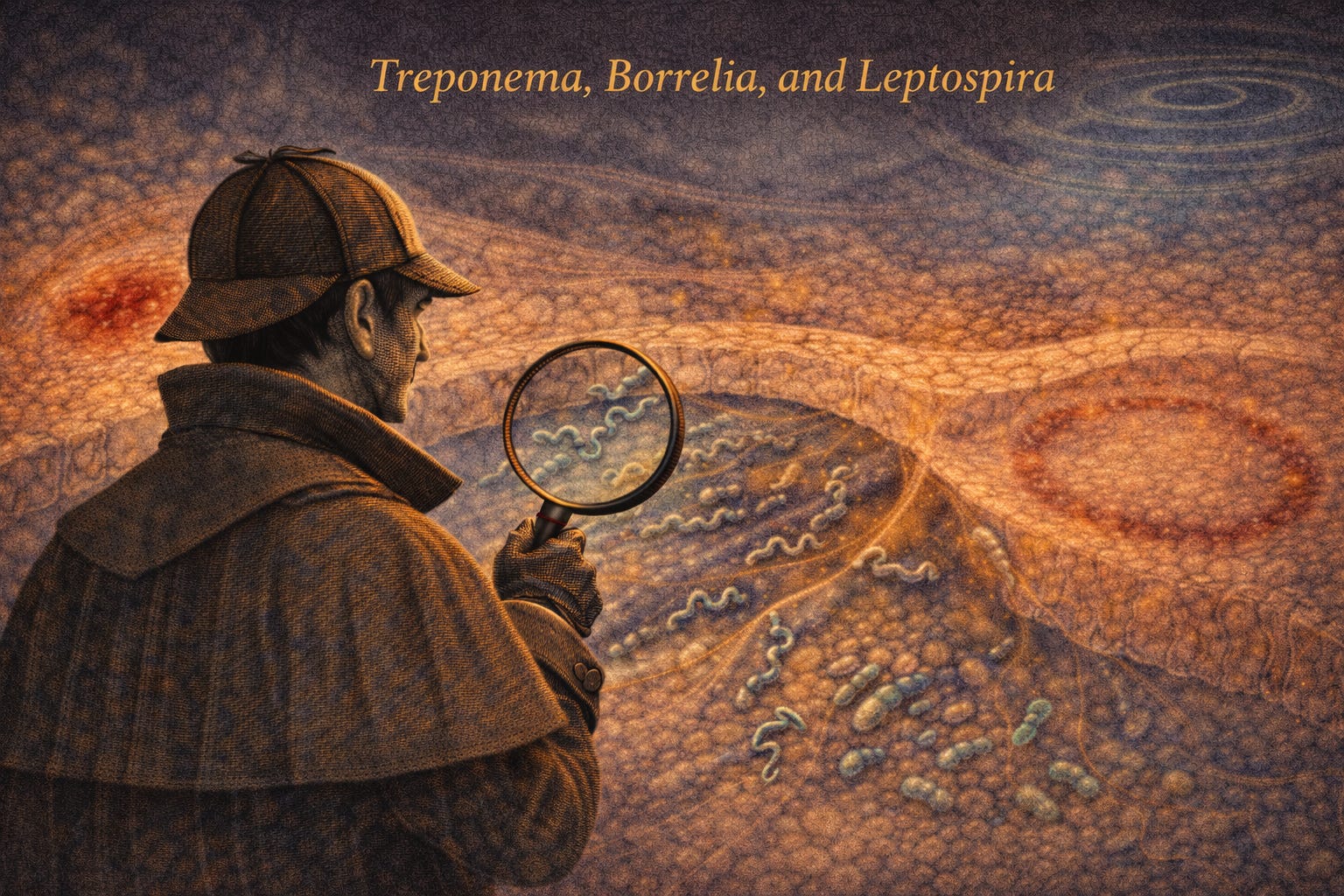
Micro 32: Treponema, Borrelia, and Leptospira
This episode introduces the spirochetes - slender, helically coiled bacteria distinguished by axial filaments that permit corkscrew motility. Drawing from Murray’s Chapter 32, it explores how this unique structure enables deep tissue penetration and systemic dissemination.
The narrative begins with Treponema pallidum, the agent of syphilis. Its pathogenesis is defined by immune evasion, slow replication, and a staged clinical course - from painless chancre to systemic rash, latent infection, and potential tertiary disease affecting the cardiovascular and nervous systems.
Next, Borrelia…
The skinny
The skinny isn't ready yet — notes appear once the transcript is processed.