682-SMARCA5 Control: Decoupling Pancreatic Malignancy
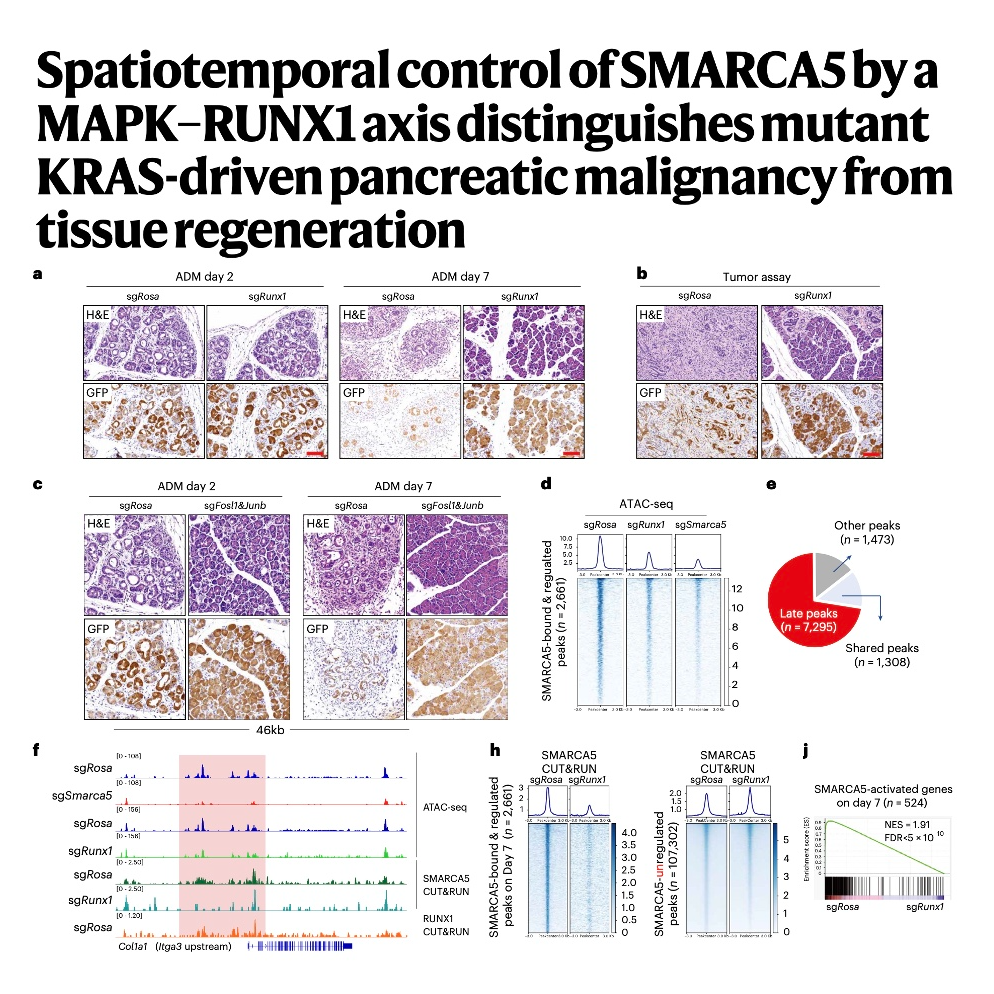
This research identifies the chromatin remodeler SMARCA5 as a critical molecular switch that distinguishes cancerous growth from natural tissue repair in the pancreas. While traditional treatments often cause collateral damage by inhibiting factors necessary for both regeneration and disease, scientists found that SMARCA5 specifically maintains the accessibility of DNA regions required for malignancy. In the presence of mutant KRAS, the transcription factor RUNX1 recruits SMARCA5 to "lock in" a neoplastic state, effectively preventing acinar cells from returning to their healthy form after…
The skinny
The skinny isn't ready yet — notes appear once the transcript is processed.