820-Tuft Cell Paracrine Drives Gut–Brain Parasite Defense
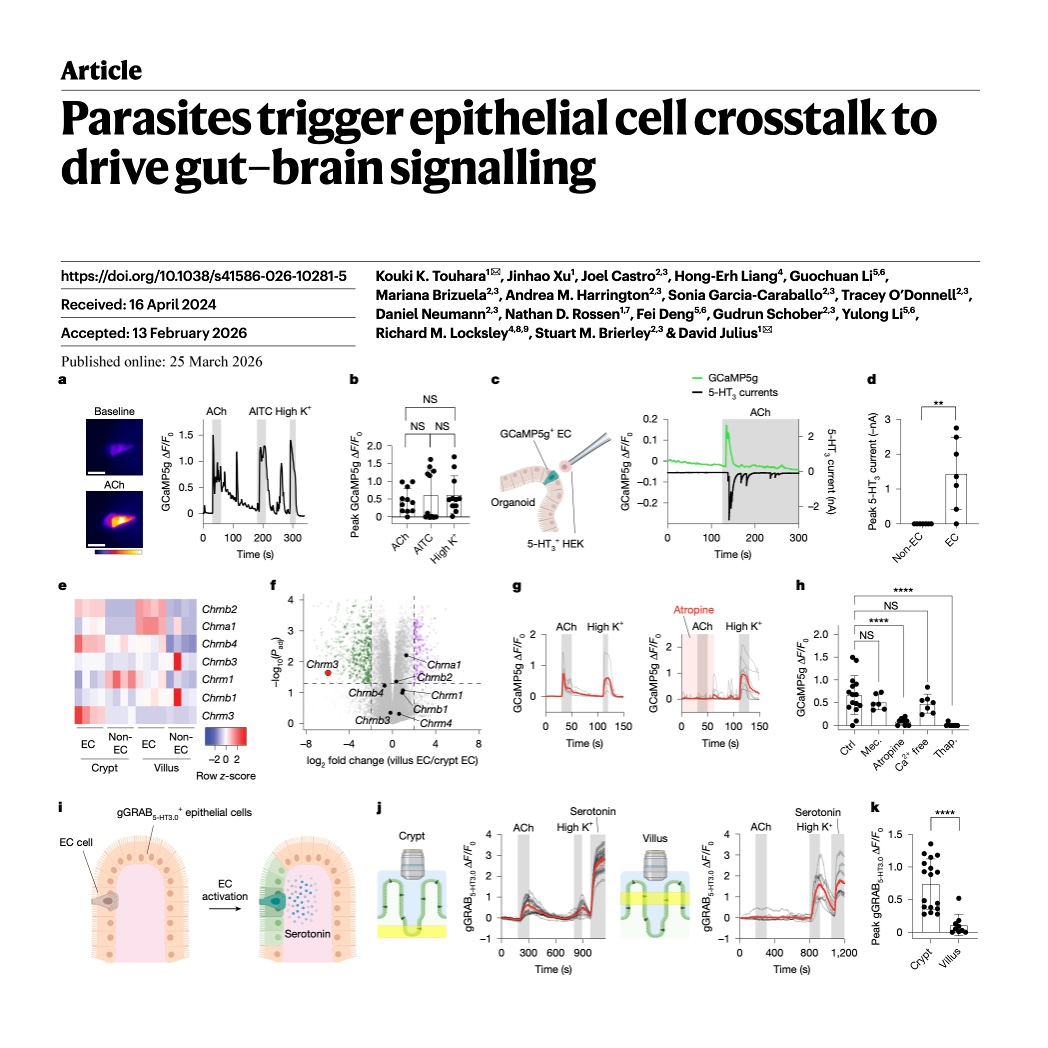
This research identifies a sophisticated gut-brain communication pathway where specialized epithelial cells collaborate to detect and combat parasitic infections. The study reveals that tuft cells, which sense pathogens, release acetylcholine through both immediate and long-term mechanisms to signal neighboring enterochromaffin (EC) cells. Upon activation, these EC cells secrete serotonin, which then stimulates the vagus nerve to trigger protective behaviors like the suppression of food intake. By mapping this neuro-immune circuit, the authors explain how the body transitions from an…
The skinny
The skinny isn't ready yet — notes appear once the transcript is processed.