Latest / Building Better Cultures
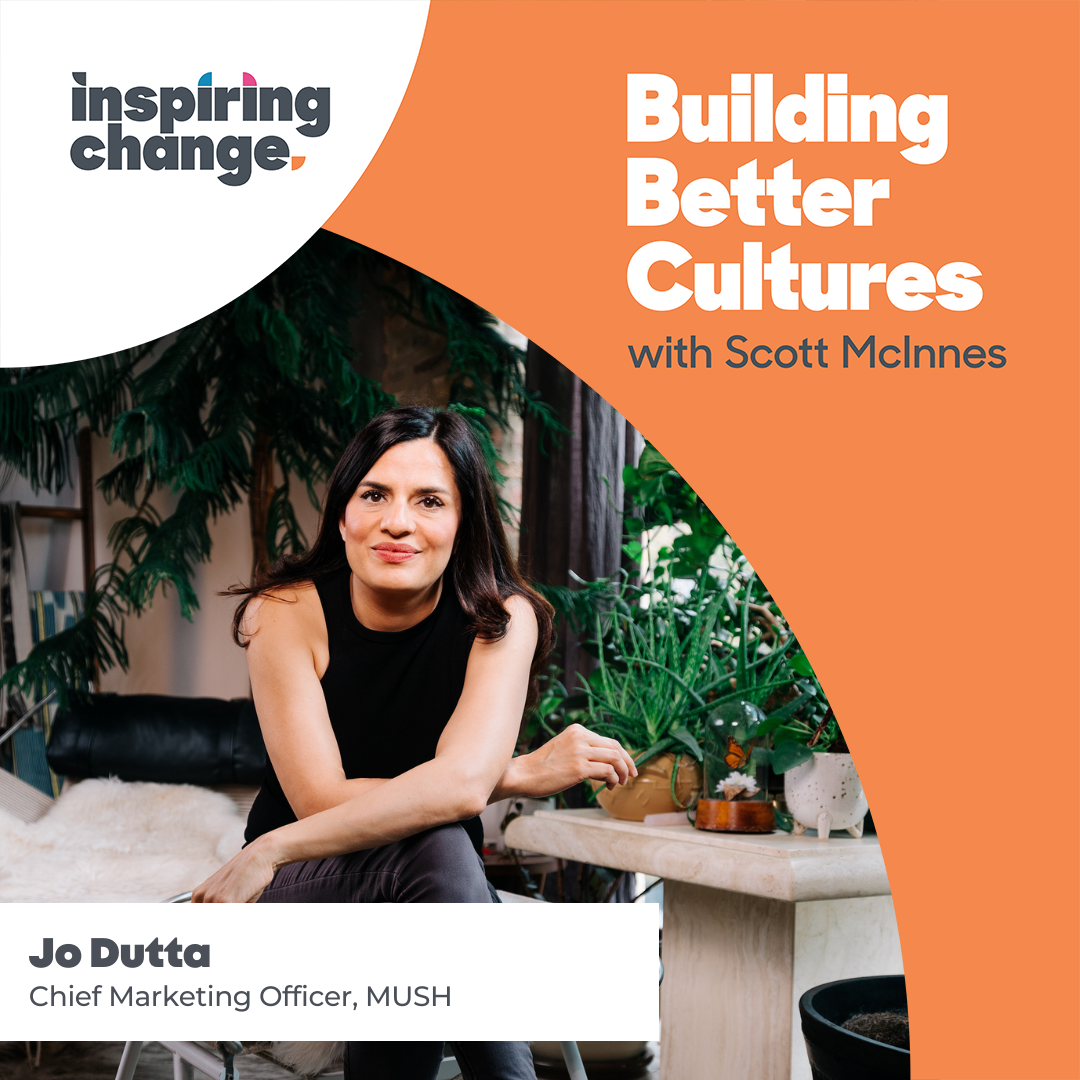
86 | From Startups to Fortune 500: Lessons in Leadership & Culture | Jo Dutta
Startups are known for being fluid, nimble and open to experimentation. In this episode of Building Better Cultures, Host Scott McInnes' guest is someone uniquely positioned to explain the mindset and best practices under which these ventures thrive. Chief Marketing Officer for MUSH, a Chicago-based food company that has experienced phenomenal growth, Jo shares not only her from-the-front observations in the start-up world but also links them back to some of the leadership experiences she has gleaned while at Fortune 500 companies such as PepsiCo. It turns out that early-stage companies and…
Read the full description
established enterprises alike have hard-earned lessons to learn – and to teach.
Startups done right embrace healthy workplace practices immediately out of the gate, even well before any formal HR function has been codified. Cultures that prioritize psychological safety, practice empathetic leadership and value internal communication set themselves up for the smoothest possible transition to maturity and scalability. Jo offers strategies for fostering employee engagement and building brand good will. She also describes the importance of building a "fine to fail" workplace environment in which leaders not only permit but encourage experimentation, risk and missteps.
Jo and Scott also get granular about exactly when the time is right to introduce a more formal HR function into the start-up structure. It's a transition that can be tough to make, but less so if leaders are equipped with the wisdom and perspective Jo has developed over her highly successful career across enterprises of all sizes and styles. Enjoy this lively, informative conversation!
KEY TAKEAWAYS
Scott opens the conversation by eliciting some of Jo's origin story.
After many years working at established companies, like PepsiCo, Jo has found the high-growth startup environment at MUSH creative and exciting.
What does an employee-obsessed culture look like? Leadership and vision set the stage.
People want to be involved with MUSH because of the sense of community that is central to the workplace and fosters the organic way in which partnerships are formed.
Bigger organizations versus small: Does size matter when it comes to employee engagement? Not necessarily, if the right principles and practices are deployed.
Some ways Jo sees that employee engagement can be improved:
Employee ownership – Adopt a cooperative model.
Employee longevity: Commit and stay close to the consumer.
Empower employees to do the right thing (even to the point of creating a P&L line item to underwrite acts of kindness to customers).
How does Jo translate customer obsession to the back-office functions?
Make sure that – regardless of role – all employees spend time on the front lines with the consumers.
Integrating with customers is both fun and it generates passion for the business.
Leaders need to understand who their consumers are and then empower employees to deliver on that promise.
Scott shares an anecdote about Haagen Dazs that encapsulates the power of customer touch and good will.
Jeff Bezos's Day 1 Concept: It's essential to keep thinking like a startup because it keeps enterprises agile, experimental and hungry. Does Jo agree? Yes, and here are three reasons why:
Beginners' mindset: Drawn from the Buddhist concept of "shoshin," it refers to an attitude of openness, eagerness and a blank slate.
Failure as Data Acquisition: When leaders embrace mistakes, they open a path for creative problem-solving and advancement throughout the workplace culture.
Even if you don't know how, just start: Successful startups keep moving forward.
Jo believes that when an employee is not a good internal fit – and for whatever reason not carrying their weight plus some – it's incumbent upon leaders to act swiftly and decisively.
Startups don't have values-driven recruiting because they don't yet have an HR manual at all. Rather, it's about building an initial core A team.
Start-up growth at some point depends on building out from the central players, which requires a concept Jo learned from this management articl
Short listen plan
No short plan yet. We need saved quotes in chapters with known start and end times, backed by a timed transcript.
The skinny
The skinny isn't ready yet — notes appear once the transcript is processed.