273: CTVT-A acquires 15-Mb N-HT1 dicentric nuclear element via horizontal transfer
Gori K et al., Proc. Natl. Acad. Sci. U.S.A. 2025.122:e2424634122 - In canine transmissible venereal tumor (CTVT), deep sequencing and cytogenetics identify a 15‑Mb horizontally transferred nuclear element (N-HT1) acquired ~2,000 years ago that is transcriptionally active. Key terms: CTVT, horizontal gene transfer, N-HT1, PacBio long-read sequencing, centromeric fusion.
Study Highlights:
The authors screened 174 transmissible tumor genomes, focusing on CTVT, DFT1, and DFT2, using deep short-read sequencing, long-read PacBio sequencing, structural variant analysis, and metaphase FISH. In…
Read the full description
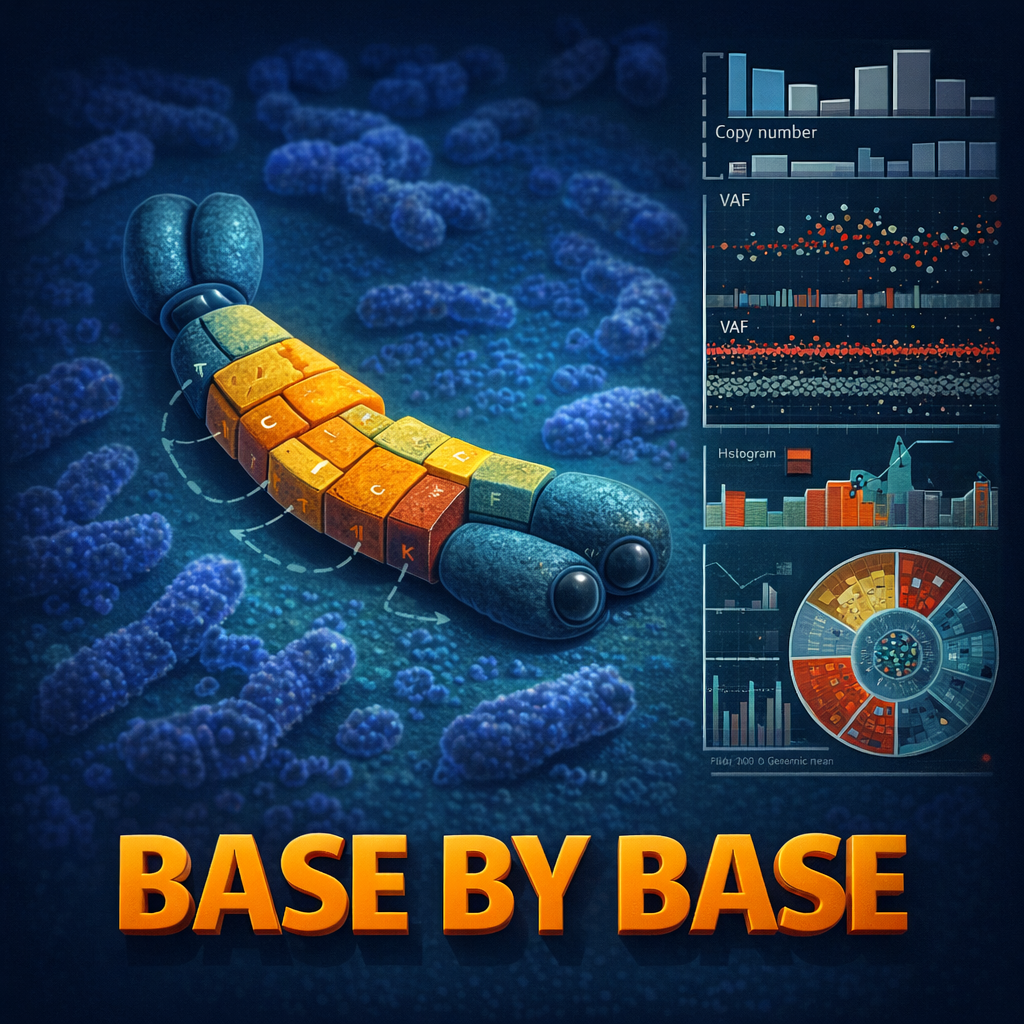
CTVT-A they discovered a 15-Mb dicentric element (N-HT1) assembled from 11 fragments of six chromosomes that forms the short arm of a small submetacentric chromosome after centromeric fusion. Mutation density and CpG-based dating place N-HT1 acquisition about 2,000 years ago, and transcriptome allele deconvolution shows N-HT1 is transcriptionally active and adopts the CTVT expression profile. Functional interrogation found no clear oncogenic drivers on N-HT1, with at least one rescued gene (ARFGEF3) later inactivated, consistent with the element behaving as a likely neutral passenger.
Conclusion:
A single host-to-tumor nuclear horizontal transfer event was detected in sampled transmissible cancers: CTVT-A acquired a 15-Mb N-HT1 element that is transcriptionally active but shows no clear evidence of positive selection.
QC:
This episode was checked against the original article PDF and publication metadata for the episode release published on 2026-01-28.
QC Scope:
- article metadata and core scientific claims from the narration
- excludes analogies, intro/outro, and music
- transcript coverage: Audited the core scientific claims presented about N-HT1: its structure, origin, timing, transcriptional activity, and evolutionary implications, as described in the article.
- transcript topics: CTVT background and transmissible cancers; SNP flipping screen to detect host-to-tumor nuclear transfer; Discovery and structure of N-HT1 (15 Mb, 11 fragments, from 6 chromosomes); Cytogenetics and centromeric fusion of N-HT1 onto a CTVT chromosome; Timing: acquisition ~2000 years ago and donor ancestry; Gene expression and functional impact (ARFGEF3 rescue)
QC Summary:
- factual score: 10/10
- metadata score: 10/10
- supported core claims: 8
- claims flagged for review: 0
- metadata checks passed: 4
- metadata issues found: 0
Metadata Audited:
- article_doi
- article_title
- article_journal
- license
Factual Items Audited:
- N-HT1 is a 15-Mb horizontally transferred nuclear DNA element composed of 11 fragments from six canine chromosomes
- N-HT1 forms the short arm of a small submetacentric chromosome via centromeric fusion onto a CTVT chromosome
- N-HT1 was acquired by CTVT-A approximately 2,000 years ago
- N-HT1 is transcriptionally active and adopts the CTVT expression profile
- There is no clear evidence of positive selection acting on N-HT1 within CTVT-A
- ARFGEF3 was rescued from a null state by N-HT1 but was subsequently inactivated again
QC result: Pass.
Chapters
(00:00:00) - Blast by Bass
(00:00:29) - Cancer Has Stealing DNA From Your Body
(00:02:41) - Horizontal Transfer of nuclear DNA in transmissible cancer
(00:07:24) - The ghost of a dog's genome
(00:11:55) - Transmissible DNA in human cancer
(00:14:08) - Step, Step, Close Hold
Short listen plan
No short plan yet. We need saved quotes in chapters with known start and end times, backed by a timed transcript.
The skinny
The skinny isn't ready yet — the transcript is, and you can read it now.
Step, step, close hold let the borrow light unfold Stitch from the do signals in a no code oh Step, step, don't let go. Welcome to Bass by Bass, the papercast that brings genomics to you wherever you are. Thanks for listening, and don't forget to follow and rate us in your podcast. Appreciate. Good to be here. So, today, I want to start with something we all just sort of take for granted in biology. A fundamental rule. Okay… continue reading