954-How autopolyploid genomes return to a diploid state
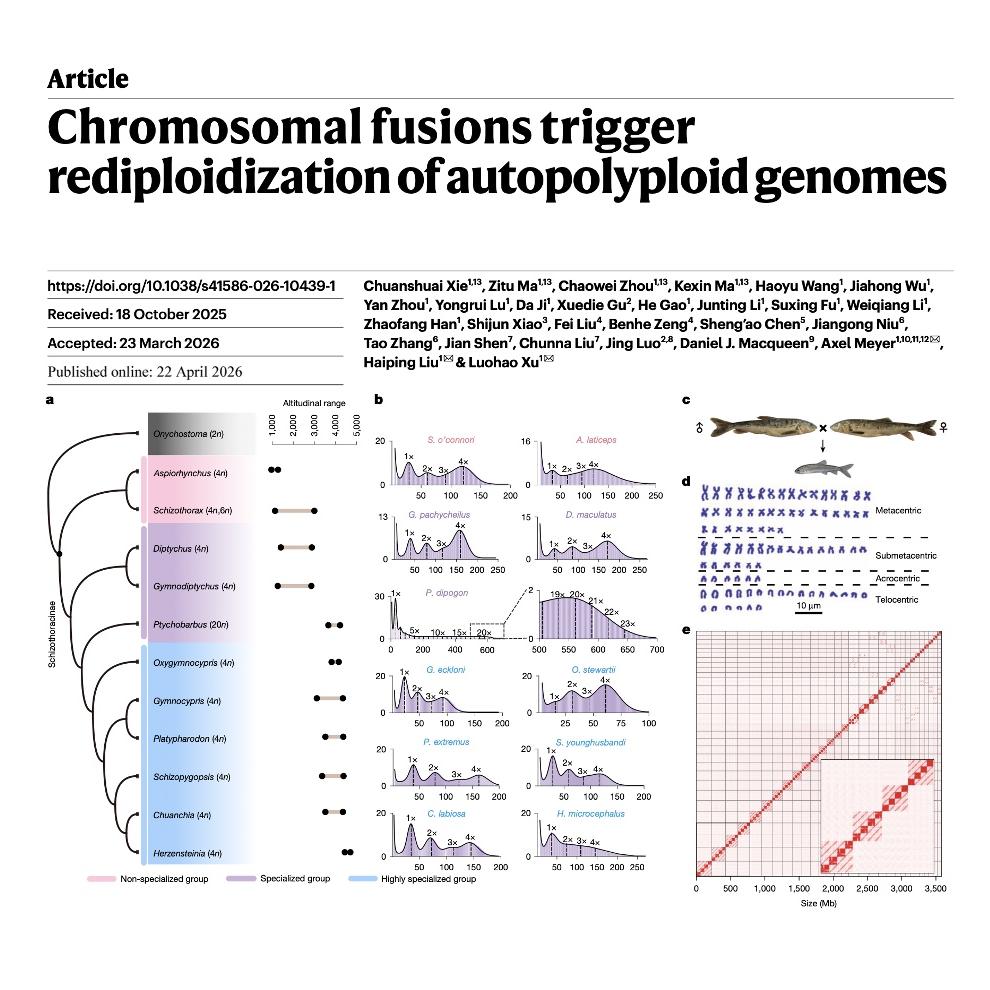
The paper describes a scientific study investigating how autopolyploid genomes return to a diploid state, focusing on snow carp (Schizothoracinae) as a primary model. Researchers utilized haplotype-resolved genome assemblies to demonstrate that these fish originated from a single ancestral whole-genome duplication event. The text explains that unbalanced chromosome fusions acted as the initial catalyst for rediploidization, causing a transition from tetrasomic to disomic inheritance. This process is asynchronous, beginning at fusion sites and gradually moving toward the ends of chromosome…
The skinny
The skinny isn't ready yet — notes appear once the transcript is processed.