740-B Cell Imprinting in Children
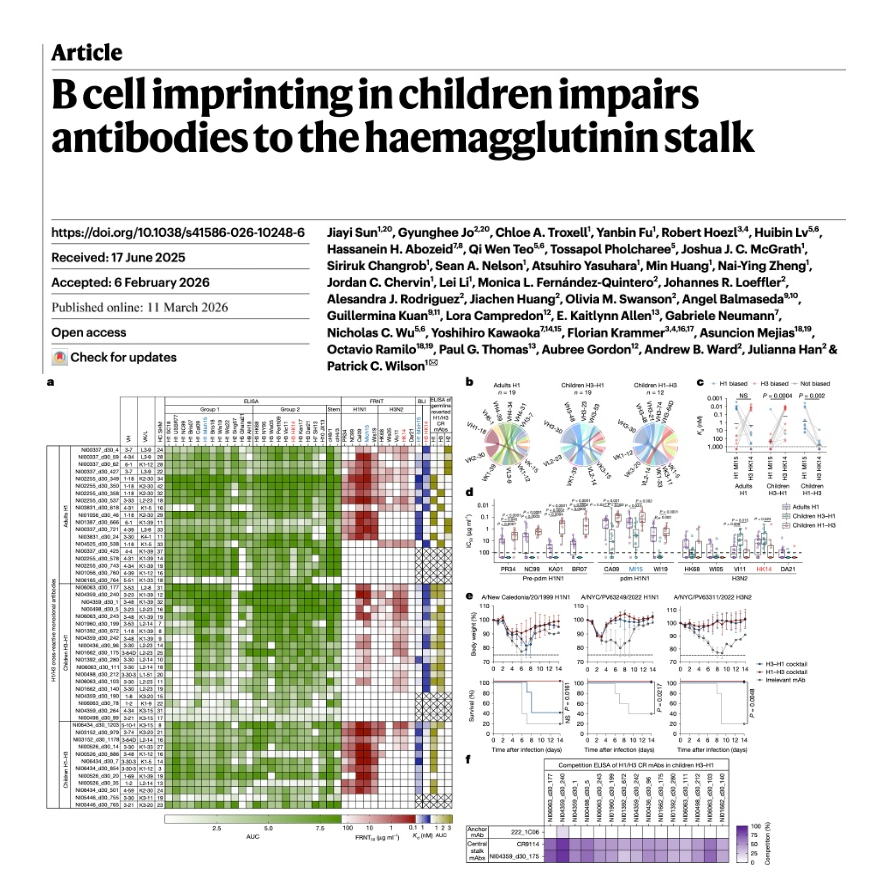
This research investigates immune imprinting in young children, a process where the body’s initial encounter with an influenza virus dictates its future antibody responses. By analyzing B cell development after sequential H1N1 and H3N2 infections, the study found that children's immune systems are not fundamentally different from adults, yet they remain highly susceptible to antigenic sin. Specifically, first infections create a memory recall bias that can diminish the effectiveness of the immune response against subsequent, different strains. The researchers identified that even a single…
The skinny
The skinny isn't ready yet — notes appear once the transcript is processed.