Latest / Building Better Cultures
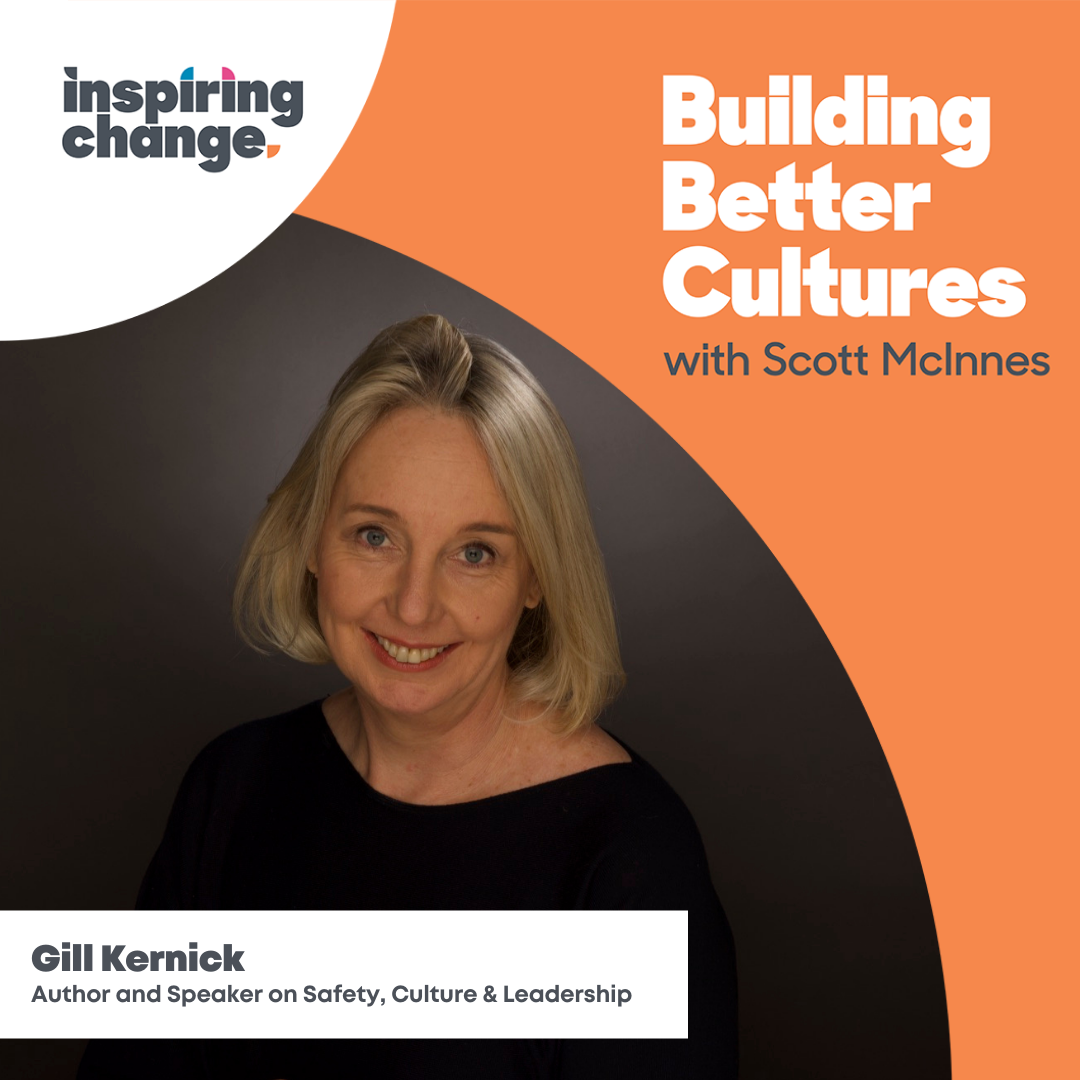
91 | Enlightened Leadership Embraces the Power of Failure | Gill Kernick
The world is no longer linear, and yet old command-and-control management structures persist. In this episode of Building Better Cultures, international management consultant Gill Kernick shares powerful insights about why it is that C-Suite executives sometimes lack the leadership skills necessary to support healthy workplace cultures. Internal communications, policies and best intentions go only so far when it comes to shifting paradigms.
Gill offers thoughts on why it is that some companies get stuck, their leadership mired in old-school thinking. Agile workplace structures give members of…
Read the full description
the team at all levels of the enterprise an opportunity to speak up and the confidence that their voices will actually be heard. Gill explains why it's so critically important to create an environment grounded in authentic care and respect. It unleashes great performances and sets up a safe landing when – as inevitability happens – failures occur.
There are concrete measures that leaders can take to empower employees to communicate now – rather than later when it's very possibly too late. Invite bad news. Look for red flags. When leaders speak honestly and with compassion, they provide the entire workplace culture permission to act with courage and conviction.
Among the suggestions Gill has for enlightened leaders:
Ask proactively for the bad news, then welcome it!
Assign and rotate the role of designated challenger among various team members.
Make mistakes a source of learning, not blame; opportunity, not failure.
Tell the truth. If something is amiss, just own it – with grace and an attitude that encourages others facing risks or failures of their own.
Click here to learn more about Gill's new book, "Catastrophe and Systemic Change: Learning from the Grenfell Tower Fire and Other Disasters."
KEY TAKEAWAYS
Gill shares a little of her background, including a lifelong fascination (starting in her formative years in South Africa) with human potential and the influence organisations can bring to bear in the contexts of equity and justice in the workplace and beyond.
Catastrophic events often share a single commonality: Concerns were raised and dismissed. Liabilities tend to go completely unnoticed because they don't fit into traditional, outmoded paradigms in an increasingly complex world
Intelligence from the front lines is critically important. Enlightened leaders understand that the healthiest workplace cultures remove barriers and free up the flow of communication.
Organisational cultures depend on fresh thinking and the safety to foster systemic change. But before change can happen, there has to be an intentional approach that focuses not on piecemeal fixes but rather a sustained platform to support meaningful evolution.
Planks in the Platform: Critical ingredients to effecting change.
A willingness to engage with dissonance (and outright resistance) and dig into the gaps that no amount of documentation or policy-making can fill or reorder.
Internal communications that directly address the changes and micro-changes that need to occur and hold space for those charged with executing them.
Disbelief will persist as long as systemic change remains an abstraction (i.e. trainings, handbooks) rather than an actual, measurable human behavior that exists in real time.
Leaders must demonstrate that they value feedback, that all voices are welcome and that mechanisms have been established to support them.
Risk-taking has to be balanced against unintended consequences, taking into account the many variables – not least low probability events with high-consequence implications. It's a multidisciplinary pursuit that requires data analysis and feedback from all stakeholders.
Diversity is the single biggest protection against bias, but workplace cultures have some distance to go before integrating not just the look of diversity but the actual voices and points of view represented by those from different backgrounds, orientations and experiences.
Time is often the enemy of complex, sustained cultural change. Meaningful paradigm shifts require inte
Short listen plan
No short plan yet. We need saved quotes in chapters with known start and end times, backed by a timed transcript.
The skinny
The skinny isn't ready yet — notes appear once the transcript is processed.