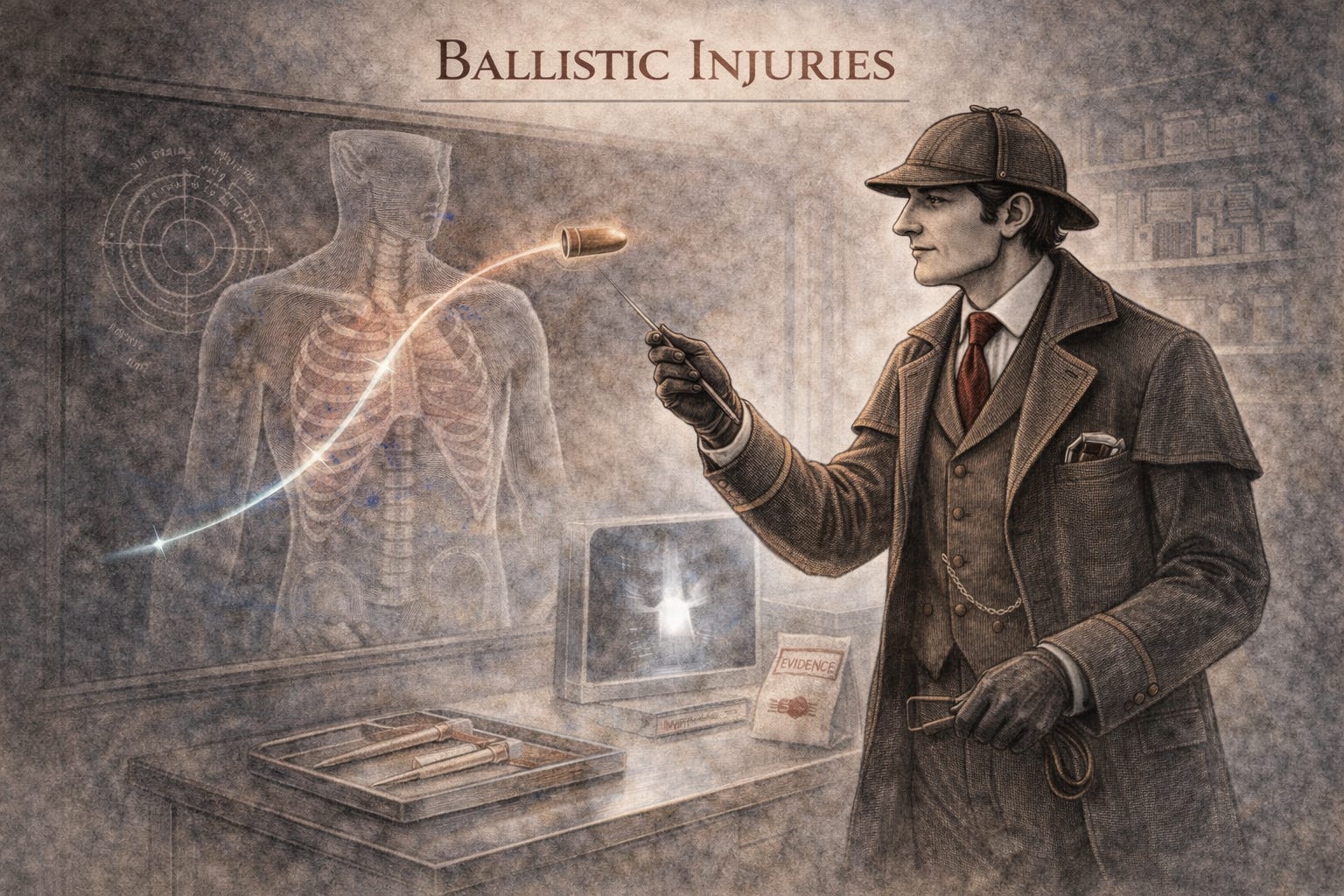
FSM 9: Ballistic Injuries
Firearms introduce a different language of injury - one written in velocity, energy transfer, and trajectory.
In this episode, we examine the forensic principles underpinning ballistic trauma. Understanding firearm injury requires integration of anatomy, physics, scene investigation, and careful morphological analysis.
We explore:
* Basic firearm mechanics and ammunition types.
* Entry and exit wound characteristics.
* Abrasion collars, soot deposition, stippling, and muzzle imprint.
* Contact, close-range, intermediate, and distant discharge patterns.
* Internal wound tracks and cavitation…
The skinny
The skinny isn't ready yet — notes appear once the transcript is processed.