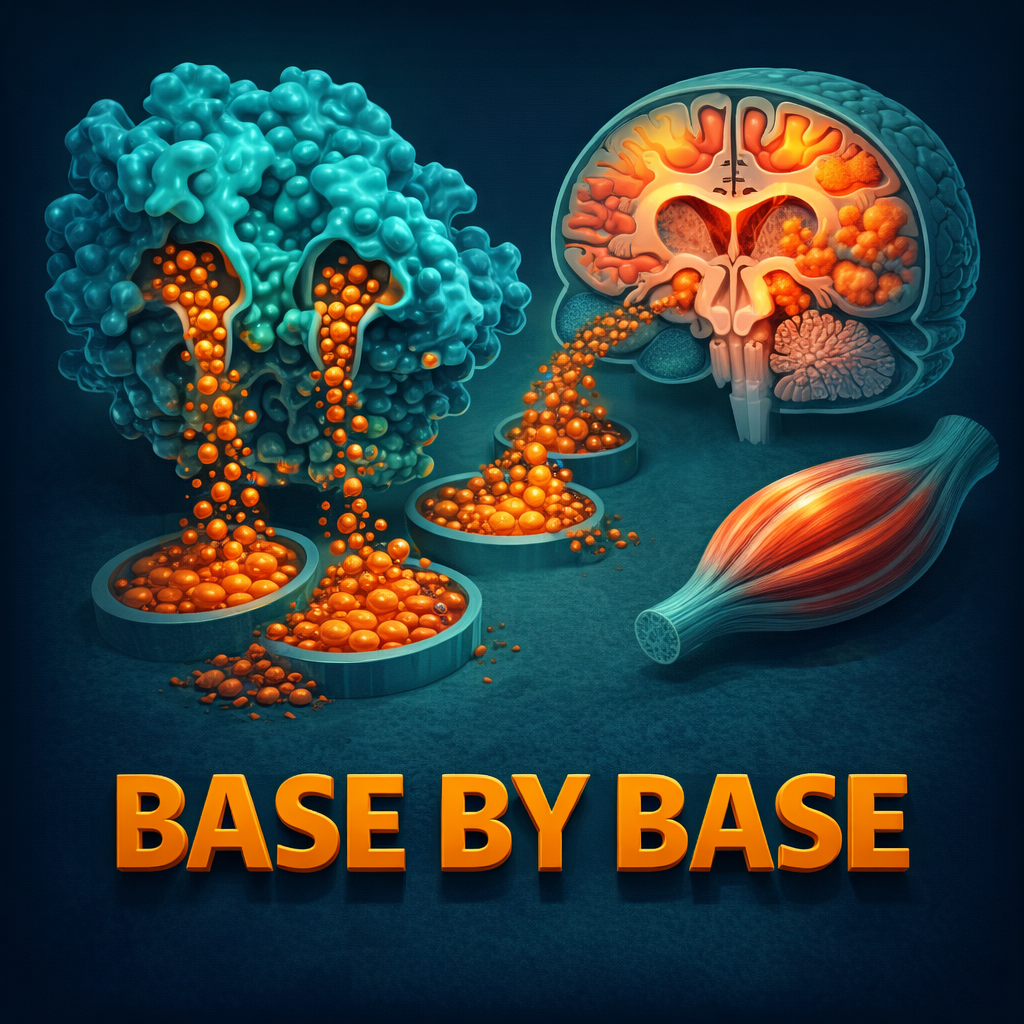
272: ADSL A429V reduces purine biosynthesis in brain and alters female mouse water-seeking behavior
Ju X-C et al., Proc. Natl. Acad. Sci. U.S.A. 2025.122:e2508540122 - Human-specific ADSL A429V substitution and a common regulatory haplotype reduce ADSL activity and raise purine substrates in the brain, altering mouse behavior. Key terms: adenylosuccinate lyase, A429V, purine biosynthesis, succinyladenosine, human evolution.
Study Highlights:
Model: mice humanized for ADSL carrying the modern-human A429V (with R428Q) were compared to wild-type littermates using ultraperformance LC–Orbitrap metabolomics and automated IntelliCage behavioral assays. Mechanistic/quantitative result: SAICAr and…
Read the full description
S-Ado concentrations increased up to ~2-fold in liver and 1.8–5.4-fold across cerebrum regions, and these increases correlated negatively with Adsl mRNA expression across tissues. Human genetics: a 7.8-kb haplotype (including rs8135371) at >97% carrier frequency is associated with lower ADSL expression, higher S-Ado in cerebrospinal fluid, and signals of positive selection. Functional implication: female humanized mice accessed water more efficiently under restricted conditions, linking reduced ADSL activity to altered behavior.
Conclusion:
Two genetic changes on the modern human lineage—a nearly fixed A429V amino acid substitution and a common regulatory haplotype—have reduced ADSL activity and expression, increasing purine substrates particularly in the brain and producing measurable behavioral effects in mice.
QC:
This episode was checked against the original article PDF and publication metadata for the episode release published on 2026-01-27.
QC Scope:
- article metadata and core scientific claims from the narration
- excludes analogies, intro/outro, and music
- transcript coverage: Audited transcript sections describing the ADSL enzyme, the A429V substitution, mouse model (humanized Adsl), tissue metabolite changes, the IntelliCage water-competition experiment with female-specific effects, regulatory haplotype and selection signals, and human CSF/metabolite correlations with intelligence.
- transcript topics: ADSL role in purine biosynthesis; A429V modern-human substitution and enzyme stability; CRISPR-based humanized Adsl mouse model; Tissue-specific metabolic substrates SAICAr and S-Ado; Brain- and liver-specific accumulation patterns; IntelliCage water-competition behavioral assay and female-specific effects
QC Summary:
- factual score: 10/10
- metadata score: 10/10
- supported core claims: 6
- claims flagged for review: 0
- metadata checks passed: 4
- metadata issues found: 0
Metadata Audited:
- article_doi
- article_title
- article_journal
- license
Factual Items Audited:
- The modern-human ADSL coding change (A429V) reduces enzyme stability and activity relative to Neanderthal version.
- A second regulatory haplotype reduces ADSL expression, especially in brain, with evidence of positive selection.
- In humanized Adsl mice, SAICAr and S-Ado accumulate, particularly in brain and liver; brain shows greatest impact due to low baseline Adsl expression.
- Female humanized mice show increased water-approach behavior under restricted water conditions; males show no difference.
- CSF levels of S-Ado correlate negatively with intelligence in humans (rg ≈ -0.13; small effect size but statistically significant).
- Positive selection signals are present for both the coding and regulatory changes, with estimated selection coefficients around 0.0016–0.0018.
QC result: Pass.
Short listen plan
No short plan yet. We need saved quotes in chapters with known start and end times, backed by a timed transcript.
The skinny
The skinny isn't ready yet — notes appear once the transcript is processed.