Two Lots of the Same Commercial Albumin Differed 5.5-Fold in Endotoxin, and the Immune Response Followed the Endotoxin, Crescent Bioresearch
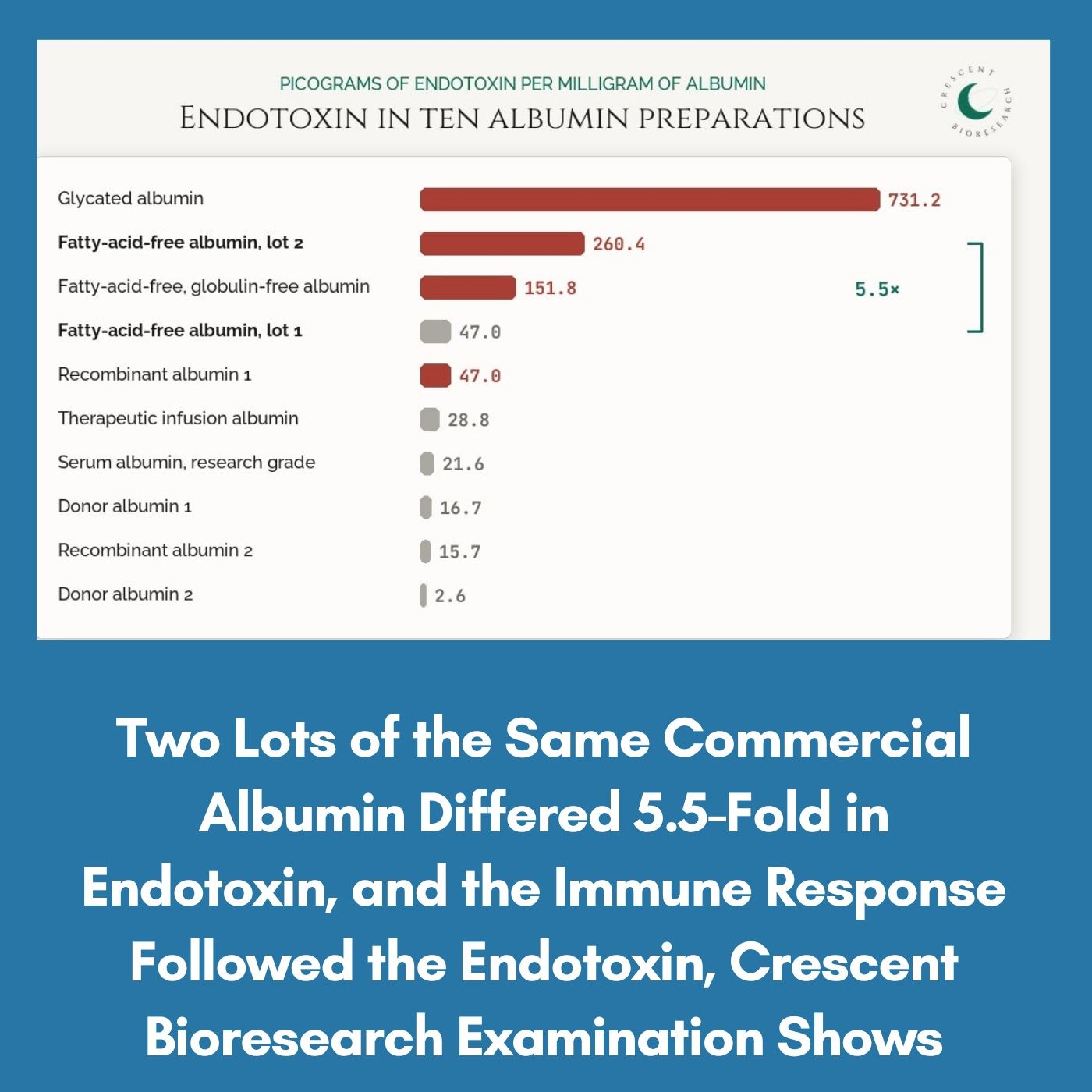
Investigators at the Medical University of Graz found that the inflammatory activity of commercial research albumins tracked their measured endotoxin content, and that an apparent effect of the protein's own chemistry disappeared once endotoxin was entered as a control variable and tested against. ALBANY, N.Y., Oct. 20, 2026 -- Two containers of the same research-grade albumin, sold under one product number, were found to carry 47.0 and 260.4 picograms of endotoxin per milligram of protein. The gap was 5.5-fold, and the response of human blood cells to the two lots followed it. That…
Read the full description
observation is one of several in a 2025 study in BBA Advances from the Medical University of Graz, which Crescent Bioresearch, a supplier of laboratory compounds, has examined for what it demands of an endotoxin certificate. The demand is a figure for every sample, because the study's most important correction could not have been made without one, and because the endotoxin field on a typical certificate of analysis supplies no figure at all. Lipopolysaccharide, the endotoxin of Gram-negative bacteria, is present wherever those organisms have been, and purified or recombinant proteins carry it unless it has been removed. The Limulus amebocyte lysate assay quantifies it, and the Graz investigators expressed it in picograms per milligram of protein, a unit that can be compared across preparations, divided, and entered into a calculation. The study turned on all three operations. Ten preparations, four properties Albumin is the most abundant protein in human plasma and is in daily use in clinical and research settings alike. Earlier reports had linked particular forms of it to immune stimulation, among them albumin partly oxidized at its single free cysteine and albumin modified by glucose, the form that accumulates in the blood of people with diabetes. The Graz group, working across the Medical University of Graz and the University of Graz, assembled ten human albumin preparations, from therapeutic infusion solution to commercial research grades, and characterized each for four properties: oxidation state, degree of glycation, fatty acid load and endotoxin content. Each preparation was then added to freshly isolated human blood immune cells, with release of the inflammatory signal interleukin-6 as the readout, and to reporter cell lines engineered to signal when the innate immune receptors TLR4 or TLR2 are activated. The response followed one of the four The therapeutic albumin produced no interleukin-6 and activated neither receptor. Several research-grade products, among them fatty-acid-free, glycated and recombinant preparations, induced substantial interleukin-6 release and activated both receptors. Across the ten, interleukin-6 release correlated with endotoxin content at a coefficient of 0.93. Fatty acid load and degree of glycation showed no consistent relationship with the response. The glycated product carried 731.2 picograms of endotoxin per milligram, the highest of any commercial albumin tested. When the investigators glycated low-endotoxin albumin themselves, to the same degree as that product and well beyond it, the result produced no interleukin-6 and no receptor activation. Low-endotoxin albumin heavily loaded with fatty acids, and low-endotoxin albumin prepared in its reduced and oxidized forms, were likewise inert. One product number, two materials The two lots of fatty-acid-free albumin from a single supplier were the clearest illustration. At 47.0 picograms per milligram, the first lot did not reach a significant interleukin-6 response. At 260.4, the second did. Nothing on the label distinguished them. The authors observed that information on contaminants in research-grade albumin is often not provided, and recommended that each product be systematically characterized before use. A correlation that did not survive a control Early in the analysis, the share of albumin in its reduced form appeared to protect against inflammation, correlating with lower interleukin-6 release. Reported on its own, that would have stood as a prope
Short listen plan
No short plan yet. We need saved quotes in chapters with known start and end times, backed by a timed transcript.
The skinny
The skinny isn't ready yet — the transcript is, and you can read it now.
Two lots of the same commercial albumin differed 5.5-fold in endotoxin, and the immune response followed the endotoxin, Crescent BioResearch examination shows. Investigators at the Medical University of Grass found that the inflammatory activity of commercial research albumins tracked their measured endotoxin content, and that an apparent effect of the protein's own chemistry disappeared once endotoxin was entered as a control variable and tested against. Two containers of the same research-grade albumin, sold under one product number, were found to… continue reading