Latest / The New Realist Podcast
China's Masterstroke: China Responds to H-1B Visa Change by Welcoming Young Talent
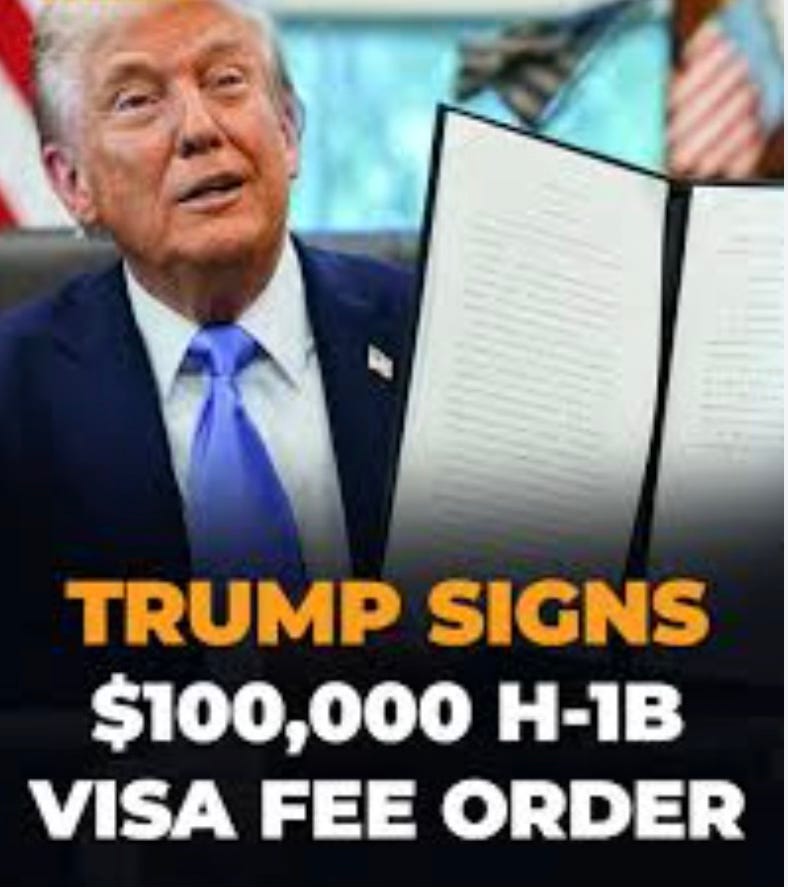
On Friday, President Trump announced a new $100,000 fee for H-1B (high-skill) visa holders starting midnight Sunday.
The announcement resulted in chaos as many current visa holders were warned to return to the U.S. by the deadline and those departing, not to leave for fear they may not be able to come back. Over the weekend, the White House tried to address the uncertainty surrounding the program by noting it does not apply to current visa holders, only new applicants.
Yesterday, I spoke with Bloomberg’s “Balance of Power” host Joe Mathieu about the implications of this change, both short and…
Read the full description
long-term.
While the visa program does need to be revised and has been subject to abuse, the administration took a hammer to what should be resolved with a scalpel. The result was the confusion we witnessed over the weekend but, more importantly, this change has enormous long term implications for US national and economic security, including our relations with critical allies such as India.
One of the many examples of these long-term implications is on our leadership in tech, science, and education – long the envy of the rest of the world and an example of critical soft power. Today, as the administration is working to strike a deal with China to buy TikTok it is worth remembering that this powerful and viral social media app is one of China’s most notable soft power successes in the modern era. China understands what the US has long known, soft power matters.
According to the late, great Joseph Nye,
soft power is the ability to affect others to obtain the outcomes one wants through attraction and persuasion rather than coercion or payment. A country’s soft power rests on its resources of culture, values and policies. A smart-power strategy combines hard- and soft-power resources.
To reduce the number of high skilled workers and students entering the U.S. in a period of intensifying competition with China around the world, the U.S. is creating a soft power vacuum that China is quickly filling.
For evidence of this, we don’t need to look further than China’s response to the Trump administrations new H-1B policy. Far from following the U.S. in reducing ‘high-skilled’ Visa’s, China is trying to attract young foreign talented international science and technology professionals with its new K visa. The K visa rolls out on October 1, just in time to “woo” talented young people being shut out of the U.S.
This is yet another example of China preparing for long term success and setting itself up to win the competition with the U.S. and a short-sided policy from the U.S. with real and long-term damaging implications.
Get full access to The New Realist at jeannesheehanzaino.substack.com/subscribe
Short listen plan
No short plan yet. We need saved quotes in chapters with known start and end times, backed by a timed transcript.
The skinny
The skinny isn't ready yet — the transcript is, and you can read it now.
on Friday in the Oval Office. Let's listen. You're very close to the technology CEOs. Are they concerned about that? Everyone's going to be happy. And we're going to be able to keep people in our country that are going to be very productive people. And in many cases, these companies are going to pay a lot of money for that. And they're very happy about it. Well, it is going to be a lot of money. We don't know… continue reading