Latest / Building Better Cultures
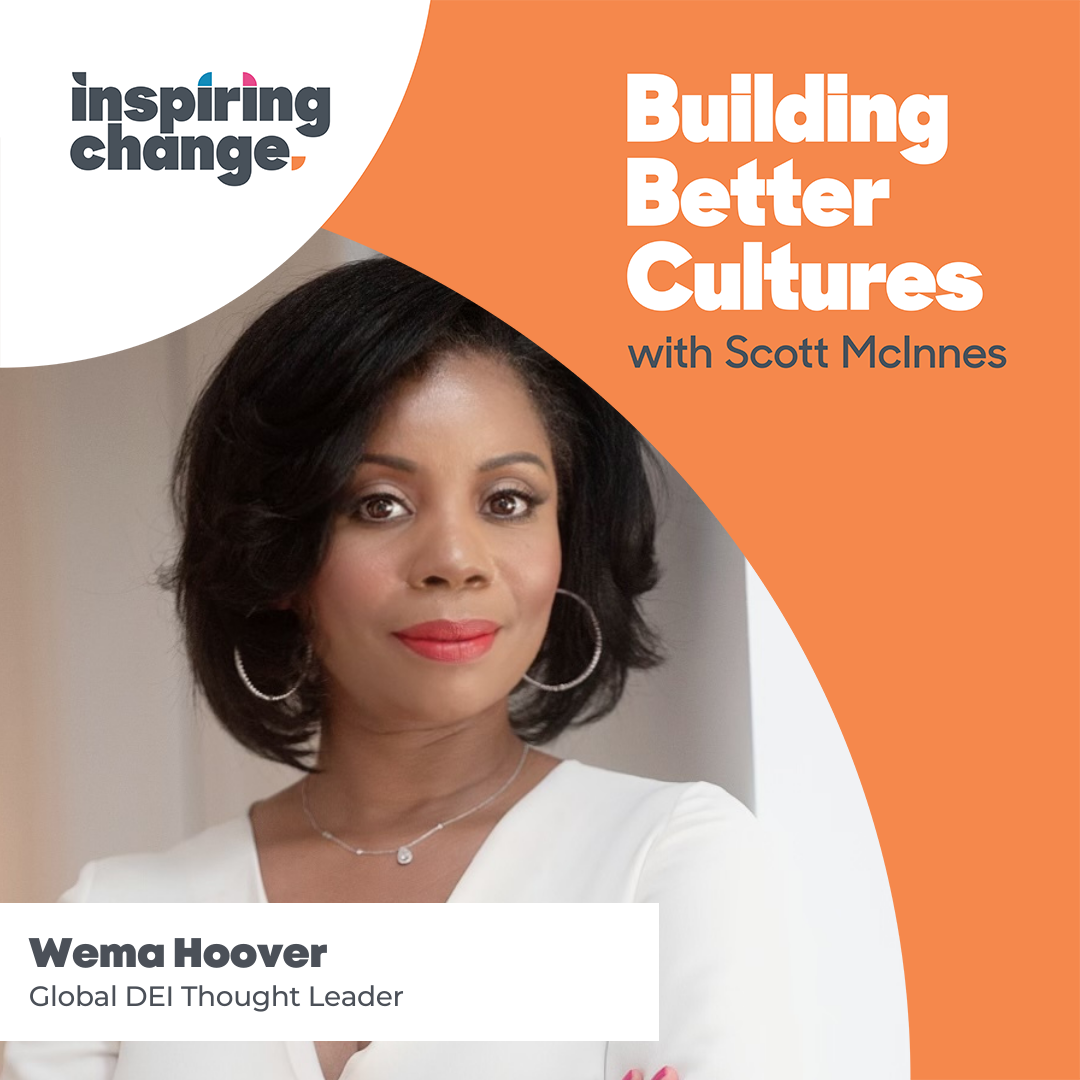
80 | Unlocking the Power of Diversity: Building a Culture of Inclusion and Equity | Wema Hoover
The summer of 2020 brought a reckoning on race around the world that few anticipated, but we may have all needed. After the months of Black Lives Matter protests and racial reconciliation, organizations and individuals alike have been left to grapple with what it actually looks like to promote diversity in the workplace.
On this episode of the Building Better Cultures podcast, host Scott McInnes sits down with global DEI thought leader Wema Hoover to talk all things diversity, equity, and inclusion (DEI), how the virtual work environment has brought this concept to the forefront in new ways…
Read the full description
and how organizations can work to effect lasting change for their leaders and employees.
Wema believes the "right" way to approach DEI is different for each individual organization, but that doesn't negate the fact that DEI is an essential aspect to a successful organization. During her time at some of the world's biggest companies— including Google, Pfizer, and Bristol-Myers-Squibb—Wema saw firsthand what it takes to promote DEI in the workplace and put in place KPIs to measure how DEI is progressing and changing a company's culture.
Scott and Wema finish their conversation by talking through the many benefits promoting diversity can have on an organization, including the ability to recognize differences in your customer base and creating a purpose-driven organization your employees actually want to work for. Creating a work environment of diversity, equity, and inclusion is not easy, Wema says, but in order to do so, organizations must look at their stats and listen to their employees, while employees work to find the courage to raise their voice.
KEY TAKEAWAYS
Wema's journey to becoming a global DEI thought leader.
COVID-19's impact on diversity, inclusion, equity, and mental health in the workplace.
Corporations now have a bigger role to play than ever in addressing the fact that there is little to no separation between personal time and work time, due to an increasingly virtual working environment.
An introduction to and definition of DEI—diversity, equity, and inclusion.
Why it's critical for organizations to get their DEI strategies right, and what "right" looks like.
It's critical both to have an ambition and to have a strategy to combat apathy in employees.
One of the biggest barriers to creating a culture of DEI in organizations is the desire to do good, but thinking that desire is good enough to effect change.
Organizations need to ask questions of themselves and their teams to create parallels and pathways to educate their organization.
Success in DEI looks like evolving your organization's culture.
To move the needle in the area of DEI, leaders need to:
Start by understanding themselves.
Create a space for dialogue.
Make DEI more than a one-time thing, but part of Management 101 basics.
If you're a leader who's not part of a marginalized group, you need to be courageous and unafraid of asking questions.
Asking and seeking to understand creates new norms for your organization and teams.
Great leaders step up and recognize the absence of empathy and humility in themselves and their company culture.
Wema believes that leaders should put measures and KPIs in place to effect lasting change when it comes to DEI.
The types of KPIs an organization can use to promote diversity and inclusion include:
Data
Hiring stats
Promotion demographics
Leadership demographics
Talent programs
Engagement surveys
The channels for success in the C-suite are sometimes so narrow, Wema believes organizations need to widen those channels to promote DEI.
Quotas on diversity become insignificant when channels for success are broadened.
The benefits to organizations of having a more diverse and equitable workforce include:
Harnessing the full complement of your organization
Recognizing the differences in your customer base
Promoting a purpose-driven organization that employees want to work for
Wema believes that the future is now when it comes to DEI and moving the social climate forward.
The first things to do on your DEI journey, according to Wema:
Or
Short listen plan
No short plan yet. We need saved quotes in chapters with known start and end times, backed by a timed transcript.
The skinny
The skinny isn't ready yet — notes appear once the transcript is processed.