Latest / Cramming for the Apocalypse Podcast
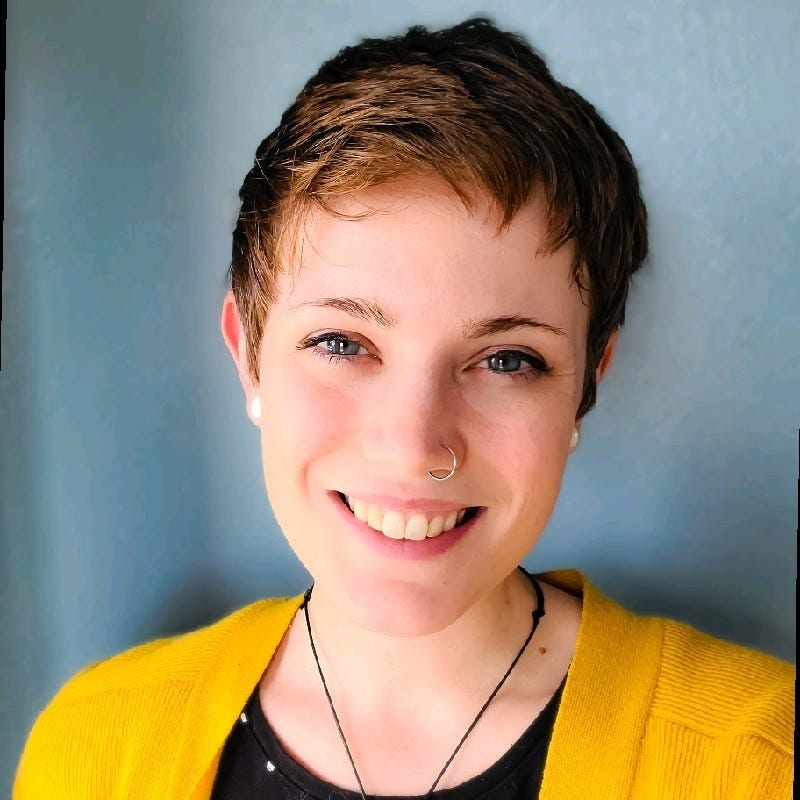
Climate Ed, Climate Communication and the Hope Gap with Kat Davis- Ep. 3
Awhile back I came across a class by AASHE (The Association for the Advancement of Sustainability in Higher Education) that was uncannily up my alley. It was called Climate Anxiety to Action: Tools to Build a Radical Imagination and it was taught by Kat Davis. It turned out that Kat Davis happened to be the Climate Justice Advisor for the very school district my son goes to school in, Portland Public Schools. So of course I connected and we grabbed coffee. And later, Kat and I sat down to have this conversation so that you all can hear more about her approach to climate education and…
Read the full description
specifically about radical imagination. You can follow Kat’s Envision Our Futures project on Instagram.
Resources from the episode:
* Yale Program on Climate Communication
* Climate Mental Health Network
* The Golden Hour by Anya Kamenetz
* Emergent Strategy by adrienne maree brown
* A Field Guide to Climate Anxiety by Sarah Jaquette Ray
* All We Can Save ed. by Ayana Elizabeth Johnson and Katharine K. Wilkinson
* This Change Everything: Capitalism vs. Climate Change by Naomi Klein
* Braiding Sweetgrass by Robin Wall Kimmerer
Credits:
* Cramming for the Apocalypse artwork by Amanda Burnham
* Music by DayFox
Transcript
Elizabeth: Hi everybody. Thank you for listening to this podcast slash audio version of the cramming for apocalypse newsletter. And with me today, I have Kat Davis, who is the advisor for climate justice at Portland Public Schools.
And I'm really excited to have you. Thanks for coming, Kat.
Kat: Thanks for having me.
Elizabeth: Let's just start by having you tell us a little bit about yourself. What's your role and what's your journey to get to where you are now? Absolutely. So as you mentioned, I'm the advisor for climate justice with Portland Public Schools.
And my role is to oversee the implementation of our climate crisis response, climate justice and sustainable practices policy, which was 2022. It's a [00:01:00] really widespread overreaching policy that encompasses a commitment to greenhouse gas reduction. Reducing our energy, water, waste, transportation costs and emissions, but also has a real intentional focus on resilience for our community or the mental health and wellness of our students, as well as student and staff engagement and empowerment in addition to climate literacy.
So it's a the climate crisis response policy is a wide reaching policy that encompasses pretty much every department at Portland public schools and really takes the. Opportunity to collaborate with our students and our teachers and our staff and our community to make sure that this comes into the full realization, and I started in June of 2022 so I got to start after this policy had already been adopted and was, you know, people were really excited to see some momentum move forward with this, so I got to just kind of dive right into it and, you know, take it from there and start listening to our [00:02:00] community and our staff to really see what this was going to look like on the ground.
That's awesome. And what have you seen in the last year? Like what is the, have you seen progress? Have you seen challenges?
Kat: Absolutely. So. It's interesting because Portland Public Schools has had a commitment to climate action for decades. So this policy didn't necessarily start climate action at PPS. Rather, it created a framework and a structure to really elevate and build intentionality and systemic, you know, a systemic commitment to integrating climate action and climate justice into everything that we do. So the interesting part about it has been, you know, I spent the first year really listening and Digging into the history of different strands of work at PPS really starting to understand what was already working really well, what were some projects that were maybe passion projects of the past that didn't have the sustainable structure or funding source to keep [00:03:00] them going.
And then what are the gaps that we need to fill to make sure that this policy is really moving forward at the pace that matches the urgency of the issues at hand.
Short listen plan
No short plan yet. We need saved quotes in chapters with known start and end times, backed by a timed transcript.
The skinny
The skinny isn't ready yet — notes appear once the transcript is processed.