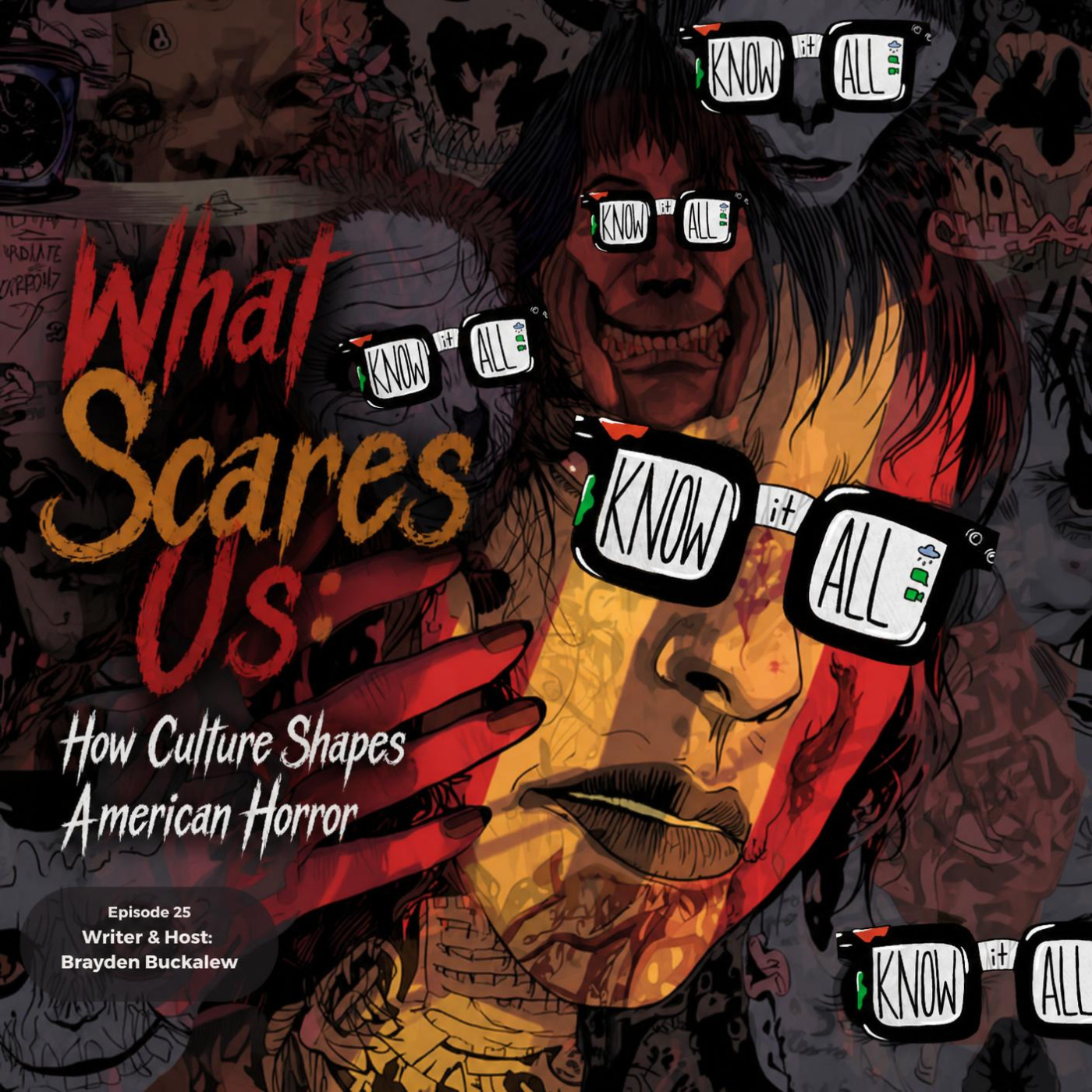
What Scares Us: How Culture Shapes American Horror
Why do the things that scare us on screen change from one generation to the next? In this episode of Know-It-All, CCBC student Brayden Buckalew explores how American horror films reflect the cultural anxieties and real-world fears of their time. From the mysterious monsters of early horror to Cold War-era fears of science and mass destruction, and eventually the self-aware scares of Scream and the rise of psychological horror, the genre has continually evolved alongside American society. Drawing on the documentary Nightmares in Red, White & Blue: The Evolution of the American Horror Film and…
Read the full description
research on the psychology and cultural significance of horror, Brayden examines why scary movies can be about much more than shock value. Horror gives audiences a controlled space to experience fear while offering filmmakers a way to explore society's anxieties about war, violence, social change, and an uncertain future. So, what makes a scary movie scary? Sometimes, it may have less to do with the monster on screen and more to do with what we're already afraid of. This week's host, Brayden Buckalew, is a 21-year-old General Studies student at the Community College of Baltimore County and a Baltimore native. He is graduating from CCBC and hopes to transfer to the University of Maryland, with an ultimate goal of becoming a firefighter. A longtime horror movie fan, Brayden created this episode for MCOM 150: Movies: History & Art, taught by Professor Beth Baunoch. After watching Andrew Monument's documentary Nightmares in Red, White & Blue: The Evolution of the American Horror Film in class, Brayden became interested in looking beyond horror's scares and shock value to understand how the genre reflects cultural and societal fears.
Short listen plan
No short plan yet. We need saved quotes in chapters with known start and end times, backed by a timed transcript.
The skinny
The skinny isn't ready yet — notes appear once the transcript is processed.